
Bone Grafting Before Implants - Do You Need It?
Not everyone who wants dental implants needs bone grafting first. A good number of people come in expecting to hear they need a bone graft for dental implants, and they walk out of that first consultation with a very different timeline than they had anticipated. For others, skipping the graft and going straight to implant placement would compromise the result from day one. Which situation you’re in depends almost entirely on what the jaw looks like right now.
This post covers when bone grafting is necessary before getting dental implants, when you can proceed without it, the main types of grafts, what the surgeon at Misch actually does, and what recovery looks like in real terms.
Why Your Jawbone Matters More Than the Tooth Did
What Happens to Bone After Tooth Loss
A tooth root stimulates the jawbone every time you bite or chew. That mechanical pressure signals the body to maintain bone density in that area. When a tooth is lost, the signal disappears. Within the first year after extraction, the jaw typically loses about 25% of its width at the extraction site. Over the next few years, height loss follows. By year three, some patients have lost enough bone volume that standard implant placement becomes difficult or impossible without first rebuilding the foundation.
This process is called bone resorption, and it happens regardless of age or overall health. The body is doing exactly what it’s designed to do when there’s no longer a root providing stimulation.
What Implants Actually Require
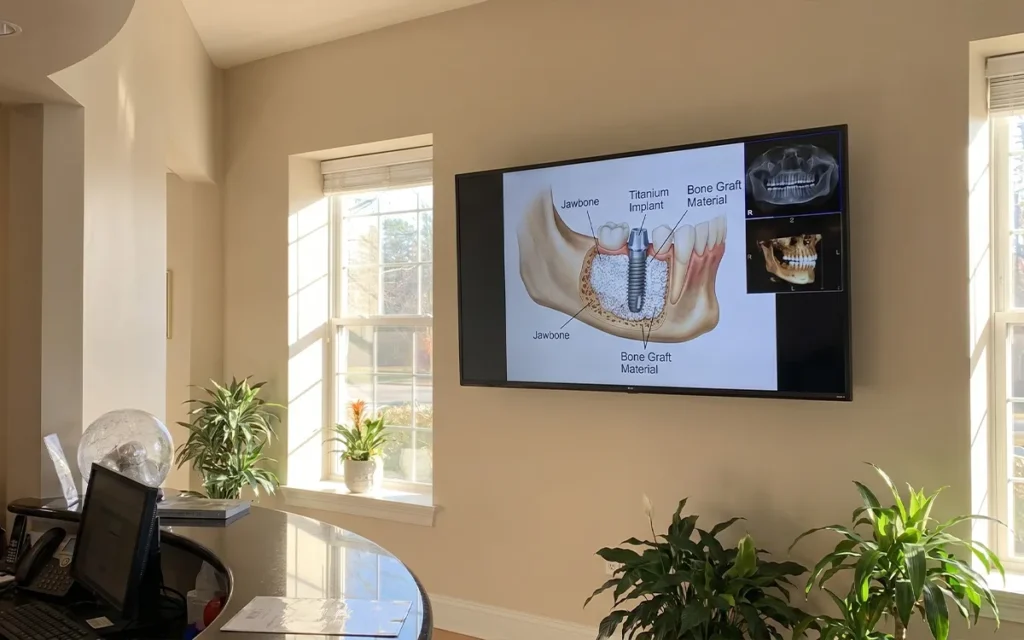
A dental implant is a titanium post anchored into the jawbone. For that anchor to hold and integrate properly, there has to be enough bone volume to surround the post on all sides. Think of it like setting a fence post: you need enough soil around it to keep it stable, and the soil has to be dense enough to hold. Bone that has resorbed significantly after tooth loss often won’t meet that threshold. A bone graft creates the necessary volume before the implant goes in.
The exact requirements depend on implant diameter, location in the jaw, and how load-bearing the original tooth was. Front teeth generally have more forgiving requirements than molars. Upper jaw placement in the back comes with an additional consideration: the sinus cavity sits just above those teeth, which limits how much vertical bone is available. That’s a distinct situation, covered below.
When Bone Grafting Is Necessary Before Implant Placement
Long-Term Tooth Absence
If a tooth has been missing for two or more years without a replacement, significant bone loss is likely. The longer the gap, the more pronounced the resorption. Patients who wore dentures for years, or who had a tooth extracted and never replaced it, are the most common candidates for a dental bone graft before implant placement. A cone beam CT scan shows the current bone volume and density clearly, and that imaging tells us whether the existing bone is sufficient or whether we need to build it up first.
Post-Extraction Grafting
Grafting doesn’t always happen months after the fact. Socket preservation grafts are placed at the time of extraction to prevent the bone loss that would otherwise occur naturally. If your treatment plan includes removing a tooth and replacing it with an implant, this is usually the cleanest path: extract, graft the socket immediately, allow three to four months of healing, then place the implant into the preserved site. The result is a better foundation than what would exist had the socket been left to resorb on its own.
Bone Loss from Gum Disease
Severe periodontal disease doesn’t only affect the gums. It destroys the bone surrounding tooth roots, which means patients who have lost teeth to gum disease often present with compromised bone in multiple areas. In these cases, grafting creates a healthy environment that will actually support an implant long-term. Gum disease treatment and bone regeneration are addressed before implant surgery, not at the same time, because placing an implant into an infected or inflamed site significantly reduces the chance of success.
Upper Jaw and Sinus Anatomy
The upper posterior jaw (where upper back teeth sit) is directly below the sinus cavity. When teeth in this region are lost, the sinus often expands downward into the space where the roots were, leaving less vertical bone height for an implant. A sinus lift procedure addresses this by creating space between the sinus membrane and the jaw, then filling that space with grafting material. This is a specialized procedure that requires precise surgical technique. More detail is available on our sinus lift page.
When You Might Not Need a Bone Graft
Immediate Implant Placement
If a tooth is being extracted and the surrounding bone is healthy and intact, it’s sometimes possible to place the implant the same day as the extraction. This works when there’s no active infection, no significant bone loss around the tooth root, and the remaining bone has adequate volume to stabilize the implant during healing. Not every extraction site qualifies. The decision is made after direct examination, but immediate placement happens more often than people expect.
Adequate Bone Volume
Patients with recently extracted teeth, patients whose extractions were planned as part of an implant case, and patients with naturally denser bone may be excellent candidates without any preliminary grafting at all. Second opinions sometimes reveal that a prior recommendation for grafting was precautionary rather than clinically necessary. That’s worth knowing before committing to additional procedures and a longer timeline.
The Main Types of Bone Grafts Used Before Implants
Not all bone grafts work the same way or serve the same purpose. The procedure is matched to the specific deficiency identified in imaging.
Socket Preservation
Placed at the time of tooth extraction, a socket preservation graft fills the socket with grafting material, covered with a membrane and left to heal. Over three to six months, the material is gradually replaced by the patient’s new bone. This is the most common type and the most straightforward in terms of recovery. The American Association of Oral and Maxillofacial Surgeons recognizes socket preservation as the standard of care when implant replacement is planned.
Ridge Augmentation
When bone loss has already occurred and the ridge of the jaw has narrowed or flattened, ridge augmentation rebuilds the width and height. This is more involved than socket preservation, but it’s also what makes implant placement possible in cases where it wouldn’t otherwise be. The graft material is shaped to recreate the natural contour of the jaw and secured with a membrane or fixation hardware while healing.
Sinus Lift
Specific to the upper posterior jaw. Either through a lateral window approach (used for significant height deficits) or a transcrestal approach (used when height loss is minimal), the sinus floor is raised and bone grafting material is placed beneath it. Healing typically takes four to six months before implant placement. For a detailed explanation, visit our sinus lift page.
Block Grafting for Severe Defects
For severe deficiencies where large volumes of bone need to be rebuilt, a block graft uses a segment of bone harvested from another site (most commonly the chin or back of the lower jaw) and secured with titanium screws to the deficient area. This is the most technically demanding type and is used when other methods can’t provide enough volume. Integration takes several months before the graft is stable enough to receive an implant.
The Surgeon Who Does This Work at Misch
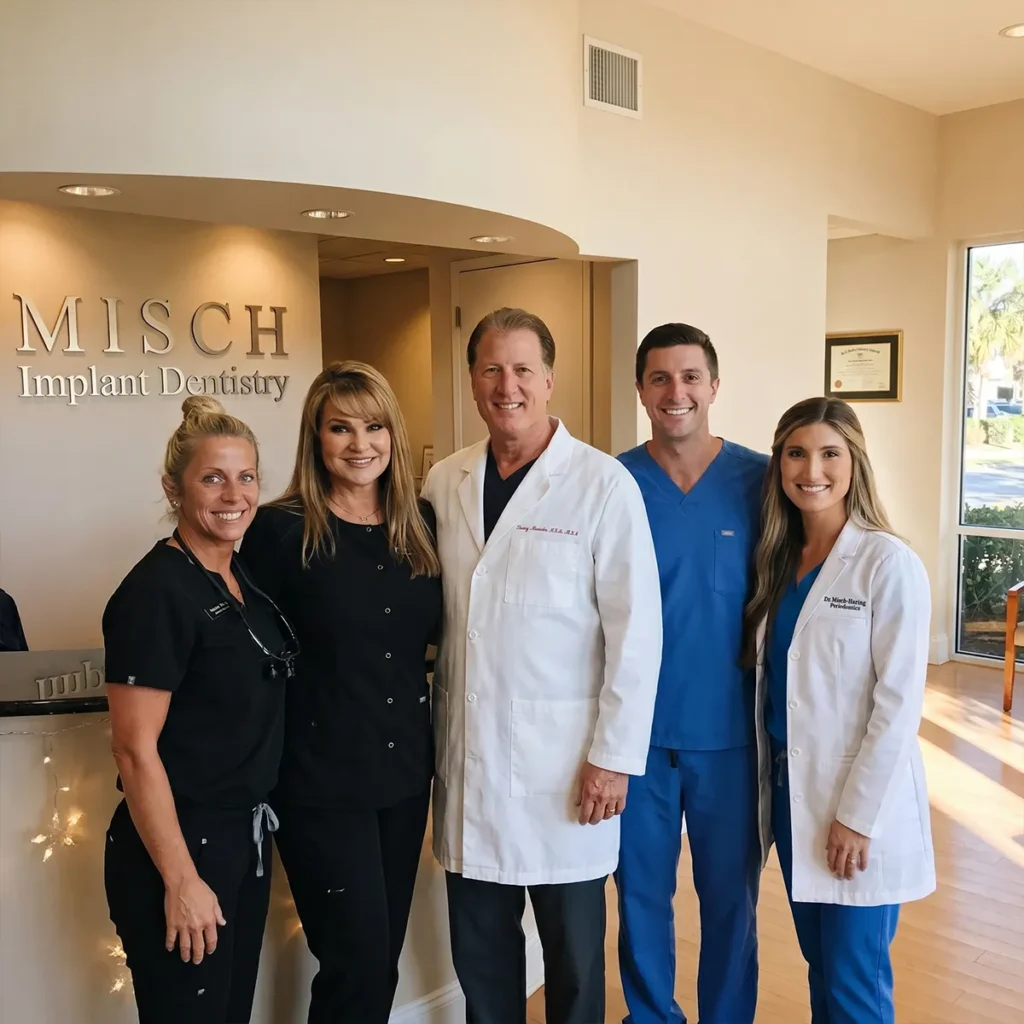
Dr. Maggie Misch-Haring is a board-certified periodontist who performs all dental implant surgeries, bone grafting procedures, and gum grafting at this practice. She completed a Master of Science degree and co-authored peer-reviewed publications on bone augmentation and implant-supported procedures. Dr. Craig Misch has published extensively on bone grafting science, including his textbook “Horizontal and Vertical Bone Augmentation for Dental Implant Therapy” (Quintessence Publishing), which is used in clinical training programs internationally and represents an academic depth no local competitor can claim.
What matters practically: the surgeon who evaluates whether you need a bone graft is the same person who performs it if you do, and she’s working alongside the prosthodontist who will place your final teeth. Surgical and restorative planning happens in the same room. Most practices refer out for surgery and bring you back for the restoration, which means the surgeon who develops the plan never sees how the final prosthetic work needs to land. That disconnect is a real source of complications for patients who don’t know to look for it.
Bone Graft Healing and What the Timeline Actually Looks Like
The First Two Weeks
Swelling, tenderness, and some discomfort are normal in the days following a bone graft. Most patients manage with over-the-counter pain relief, though prescription medication is available if needed. You’ll be on a soft diet and instructed to avoid pressure or trauma to the surgical site. The most important thing during this period is keeping the graft undisturbed while initial clotting and early healing take place.
Integration Takes Months, Not Weeks
This is the part most people find difficult to accept. Grafting material integrates gradually. The graft itself is not new bone; it’s a scaffold your body uses to build new bone over time. Depending on the type and extent of the graft, integration takes three to nine months before the site is ready for implant placement. Socket preservation grafts land on the shorter end. Block grafts and large-volume ridge augmentations sit on the longer end, sometimes beyond nine months.
Extending the timeline is frustrating when you’re trying to get to the finish line. Worth knowing, though: placing an implant into bone that hasn’t fully integrated dramatically increases the risk of implant failure. The waiting period is doing something real.
When Implant Placement Happens
When imaging confirms adequate graft integration, implant placement is scheduled. In many cases the placement itself goes more smoothly because the graft created a better site than what existed originally. After the implant is placed, there’s another integration period of three to six months before the final crown or prosthetic is attached. For cases that require grafting, the full timeline from graft to final teeth is typically 12 to 18 months. Cases without grafting are considerably shorter.
Common Questions About Bone Grafting Before Implants
Is the bone graft procedure painful?
The procedure is performed under local anesthesia, and IV sedation is available for patients who prefer to be comfortable and unaware during surgery. Post-procedure discomfort peaks within the first two to three days and is manageable for most patients with over-the-counter medication. Block grafts involve a second surgical site for bone harvesting, which does mean a longer and more uncomfortable recovery than other graft types.
Does everyone who has lost teeth need a bone graft?
No. Patients with recently extracted teeth, adequate residual bone volume, or favorable anatomy may be excellent implant candidates without any preliminary grafting. The only reliable way to know is through examination and cone beam CT imaging.
Can a dental bone graft fail?
Grafts can fail to integrate, though this is uncommon when placed by a trained surgeon in appropriate conditions. Smoking is the single biggest controllable risk factor and significantly increases failure rates. Active infection at the surgical site, uncontrolled systemic disease, and poor post-operative compliance are other contributing factors. When a graft does fail, it typically becomes apparent within the first few months, and the situation can usually be reassessed and retreated.
What materials are used in a dental bone graft?
The most common source for bone grafting in implant cases is allograft material, which is donor bone sourced from a tissue bank and screened to rigorous standards before use. Xenograft (bovine-derived mineral) and synthetic calcium phosphate materials are also used, often combined with platelet-rich fibrin derived from the patient’s own blood. Autogenous grafts, where bone is harvested from the patient’s own body, are reserved for cases requiring larger volumes. The choice of material is based on defect size, required volume, and the specific biological environment of the site.
Does insurance cover bone grafting?
Misch is a fee-for-service practice that does not participate in insurance networks. Some dental plans offer partial reimbursement for surgical procedures. You’d need to check with your provider directly to understand your coverage. Clear cost information is provided during the consultation before any decisions are made.
I've already been told I need a bone graft. Can I get a second opinion here?
Yes, and it’s a reasonable thing to do before committing to surgery and an extended timeline. Bring any existing X-rays or CBCT scans if you have them. We’ll review your imaging and give you an honest read on whether grafting is genuinely necessary for your situation, or whether there’s a more direct path to dental implant placement.
Not Sure Whether Bone Grafting Is Part of Your Implant Plan?
A consultation at Misch includes a thorough exam, 3D imaging when indicated, and a straightforward explanation of exactly what your jaw shows and what your options are. You’ll leave knowing whether a bone graft for dental implants is necessary, what the timeline looks like, and what the complete treatment plan involves.
Office Location:
Misch Implant & Aesthetic Dentistry
120 South Tuttle Avenue
Sarasota, FL 34237
Serving patients from: Sarasota, Longboat Key, Lakewood Ranch, Siesta Key, Bradenton, Tampa, Fort Myers, and across Florida.