
Sarasota’s Sinus Lift specialists
Sinus Lift: Creating Bone Height for Upper Jaw Implants
Your upper back teeth sit directly beneath your maxillary sinuses, which are the air-filled cavities on either side of your nose. When those teeth are lost, the bone that once supported them begins to shrink, but here is what makes the upper jaw different from the lower: as the bone resorbs from below, the sinus membrane can expand downward into the empty space. After years of tooth loss, some patients have only a few millimeters of bone separating their mouth from their sinus cavity.
That’s not enough for an implant. A standard dental implant needs at least 10 to 12 millimeters of bone height for stability. If you have only 4 or 5 millimeters, placing an implant would mean puncturing through into your sinus, a recipe for infection and failure.
A sinus lift solves this problem. We gently elevate the sinus membrane and place bone graft material underneath, creating the height your implants need. It’s one of the most common procedures we perform for patients who want upper jaw implants, and Dr. Craig Misch has refined these techniques over three decades of practice, which Dr. Maggie Misch-Haring also utilizes.
Understanding Sinus Anatomy: Why Height Matters
To understand why this procedure is necessary, we first need to look at the unique and often problematic relationship between your teeth and your maxillary sinuses.
The Maxillary Sinus and Your Upper Teeth
Your maxillary sinuses are pyramid-shaped cavities that sit above your upper premolars and molars, and the floor of each sinus is separated from your tooth roots by a thin layer of bone, which sometimes is only 1 to 2 millimeters in people with naturally low sinuses.
When upper back teeth are extracted, this bone layer begins to disappear and the sinus, which is essentially an air pocket, finds no resistance from below. Over months and years the sinus floor drops lower and lower as the bone resorbs, and patients who have been missing upper teeth for a decade may have virtually no bone between their gum tissue and their sinus cavity.
The Schneiderian Membrane
The inside of your sinus is lined with a thin, delicate tissue called the Schneiderian membrane, and during a sinus lift we must carefully elevate this membrane without tearing it. A small perforation can usually be repaired during surgery, but larger tears may require the procedure to be postponed or performed in stages while the membrane heals.
This is why sinus lifts require specialized training and experience, as the membrane is often only 0.3 to 0.8 millimeters thick and is thinner than a sheet of paper. Dr. Craig and Dr. Maggie have performed hundreds of sinus lifts and therefore understand exactly how to handle this tissue safely.
How Much Bone Do You Need?
For a standard implant in the upper posterior jaw, we typically want at least 10 millimeters of bone height, although some implant systems can work with 8 millimeters in select cases. If you have less than this, a sinus lift is necessary.
During your consultation we perform a CBCT scan that shows your sinus anatomy in three dimensions, measure the exact bone height at each potential implant site and determine if a sinus lift is needed and, if so, which technique is most appropriate.
Types of Sinus Lift Procedures
There are two main approaches to elevating the maxillary sinus, and the choice of the ideal technique depends on simple math between the amount of bone you have now and the height we need to gain.
Lateral Window Sinus Lift (Traditional Approach)
The lateral window technique is the gold standard for sinus augmentation, particularly when significant height needs to be gained, meaning more than 4 to 5 millimeters of bone.
How it works:
We make an incision in the gum tissue on the side of your upper jaw to expose the bone and, using specialized instruments, we create a small “window” in the bone wall of the sinus, typically the size of a fingernail. Through this window we carefully lift the sinus membrane upward, creating a space between the membrane and the bone floor, fill this space with bone graft material and then close the gum tissue with sutures.
Healing time:
The graft needs five to nine months to mature before implants can be placed, although in some cases, if you have at least 4 to 5 millimeters of existing bone, we can place implants at the same time as the sinus lift, provided we achieve adequate primary stability.
Best for:
Patients who need substantial bone height, such as gaining 8 to 12+ millimeters, patients with very thin existing bone or cases where multiple implants will be placed in the grafted area.
Crestal Sinus Lift (Osteotome Technique)
The crestal approach is a less invasive alternative used when only a modest amount of bone height is needed, typically 2 to 4 millimeters.
How it works:
Instead of creating a window from the side, we access the sinus through the implant site itself and, using specialized osteotomes (small instruments similar to chisels), we gently tap upward on the sinus floor, elevating the membrane by a few millimeters. The bone graft material is placed through the same opening and the implant is typically placed immediately.
Healing time:
Because the implant is placed at the same time, you avoid a separate surgery and months of waiting, allowing the graft and implant to heal together over three to six months.
Best for:
Patients who have at least 5 to 6 millimeters of existing bone and need only modest augmentation, single-implant cases or patients who want to minimize surgical procedures.
Which Technique Is Right for You?
The choice between lateral and crestal approaches depends on how much bone you currently have and how much we need to gain. Here's a general guide:
Crestal (osteotome) approach: You have 5+ mm of existing bone and need 2 to 4 mm of additional height. Implant can often be placed same day.
Lateral window approach: You have less than 5 mm of existing bone or need more than 4 mm of additional height. Implants typically placed five to nine months later.
Staged approach: In severe cases with minimal bone, we may perform the sinus lift first, wait for healing, then place implants in a second surgery.
Dr. Craig or Dr. Maggie will recommend the approach that gives you the safest, most predictable outcome based on your CBCT scan and clinical examination.
The Sinus Lift Procedure: What to Expect
The best way to prepare for surgery is to understand how it happens, so below we explain the step-by-step process so there are no surprises:
Before Surgery: Evaluation and Planning
Every sinus lift begins with a thorough evaluation where we review your medical history, paying particular attention to sinus health. If you have chronic sinusitis, allergies that cause frequent congestion, or a history of sinus surgery, we will take this into account in your treatment plan.
Your CBCT scan shows us the exact anatomy of your sinuses, including size, shape, membrane thickness, and the presence of any septae (bony partitions within the sinus), and we use this information to plan the precise location and size of the lateral window or the angle of approach for crestal elevation.
If you have an active sinus infection or significant congestion, we will postpone surgery until your sinuses are healthy, as operating on an inflamed sinus increases the risk of complications.
Day of Surgery
Sinus lift surgery is performed under local anesthesia, IV sedation, or both, depending on the complexity of your case and your comfort preferences, with most patients choosing IV sedation for lateral window procedures.
For a lateral window approach: The surgery typically takes one to two hours per sinus, during which time we make an incision in your gum, create the bone window, carefully elevate the membrane, place the graft material, and close the site with sutures. If we are grafting both sides, the total can be two to three hours for the surgery to be completed.
For a crestal approach: The procedure is shorter, typically 30 to 45 minutes, and is often combined with immediate implant placement. After the procedure, you rest in our recovery area until the sedation wears off and then a family member or friend drives you home.
Post-Operative Care
The first week after sinus lift surgery requires some specific precautions to protect the graft and the healing membrane:
Do not blow your nose for at least two weeks, and if you need to sneeze, do so with your mouth open to avoid creating pressure in your sinuses.
Do not use a straw or create suction in your mouth for one week.
Sleep with your head elevated on two pillows for the first few nights to reduce swelling.
Take all prescribed medications, including antibiotics, pain medication, and decongestants to keep your sinuses draining properly.
Avoid flying for at least two weeks, as pressure changes in the airplane cabin can stress the healing membrane.
Swelling and bruising are normal and peak around the third day, and some patients notice minor bleeding from the nose, which is expected and usually resolves in a day or two. Most patients return to work within three to five days, although strenuous activity should be avoided for two weeks.

Healing and Follow-Up
After a lateral window sinus lift, the graft needs five to nine months to fully mature and integrate with your natural bone. During this time, we’ll see you for follow-up appointments and take periodic X-rays to
monitor healing.
Once the bone has reached adequate density, confirmed by CBCT scan, we proceed with implant placement. From that point, the implant timeline follows the standard process: three to six months of osseointegration, then abutment and crown placement.
Sinus Lift Cost and Investment
We believe in complete financial transparency so you can plan with confidence. Here is a clear breakdown of the investment required to build the foundation for your new smile:
What Does a Sinus Lift Cost?
Sinus lift surgery at our practice ranges from $2,000 to $4,500 per sinus, depending on the technique used and the extent of grafting required:
Crestal (osteotome) sinus lift:
$1,500 to $2,500:
Less invasive and often performed simultaneously with implant placement, with the lower cost reflecting the shorter surgical time.
Lateral window sinus lift:
$2,500 to $4,500:
A more extensive procedure that requires more graft material and longer surgical time, falling at the higher end of the price range for large sinuses or bilateral (both sides) procedures.
These costs include the surgery, bone graft material, membrane if needed and all follow-up appointments during the healing period, but do not include the implant surgery, which is a separate procedure and cost.
Sinus Lift + Implant: Total Investment
For a complete picture, here is what a typical upper posterior implant case looks like when sinus grafting is required:
Scenario: Patient needs one implant in the upper left molar area with 4mm of existing bone, requiring a lateral window sinus lift.
Lateral window sinus lift: $3,000
Implant placement (5-9 months later): $2,500 to $3,000
Abutment and crown: $1,500 to $2,000
Total: $7,000 to $8,000
Compare this to a single implant with adequate bone (no grafting): $4,000 to $6,000. The sinus lift adds $2,000 to $3,500 to the overall investment, but it makes implants possible when they otherwise would not be.
Insurance and Financing
Some dental insurance plans cover a portion of sinus lift surgery, particularly when considered medically necessary for implant placement, although coverage varies widely. We provide detailed documentation for you to submit claims to your insurance for out-of-network reimbursement.
Risks and Complications
Our priority is your long-term health, and for this reason we discuss these risks not to cause alarm, but to ensure you are fully informed and prepared for the procedure.
Sinus Infection
Infection of the graft or sinus can occur, although it is uncommon when proper surgical technique and antibiotics are used. Signs of infection include increasing pain after the first week, fever, foul-smelling drainage or persistent swelling, and if you experience these symptoms, contact us immediately, as early treatment prevents serious complications.
Graft Failure
In rare cases the bone graft may not integrate properly, which can result from infection, smoking, membrane perforation or simply unpredictable healing. If a graft fails, we remove the material, allow the site to heal and typically attempt a second graft with a modified approach, and most patients who experience initial failure go on to successful grafting.
Membrane Perforation
The most common complication during sinus lift surgery is perforation (tearing) of the Schneiderian membrane, and small perforations can be repaired with a collagen membrane during the same surgery without impact on the final outcome. Larger perforations may require us to stop the procedure and allow the membrane to heal before attempting again. In experienced hands membrane perforation rates are low, typically below 10% for surgeons who perform sinus lifts regularly, and with this in mind, Dr. Craig and Dr. Maggie use magnification and specialized instruments to minimize this risk.
Factors That Increase Risk
- Smoking: Significantly impairs healing and increases failure rates, so we require patients to quit or drastically reduce smoking before and after surgery.
- Chronic sinusitis: Active or poorly controlled sinus disease increases infection risk, and we may refer you to an ENT specialist before proceeding.
- Uncontrolled diabetes: High blood sugar impairs wound healing, so we work with your physician to optimize your A1C before surgery.
- Blood thinners: Require coordination with your prescribing physician for temporary adjustment around surgery.
Your Sinus Lift Surgeons

25+
Years of Clinical Excellence in Sarasota
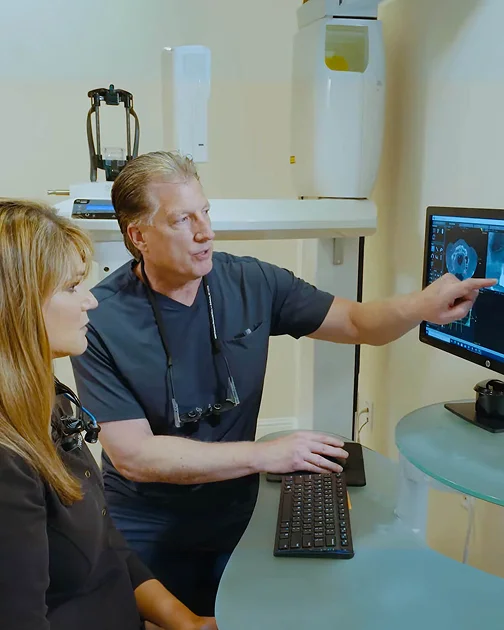
- Sinus lift surgery requires specialized training and experience, and at Misch Implant & Aesthetic Dentistry your procedure is performed by Dr. Craig M. Misch or Dr. Maggie Misch-Haring, both board-certified specialists who have performed hundreds of sinus augmentation procedures.
- Dr. Craig’s textbook on bone grafting includes an entire chapter on sinus elevation techniques, covering everything from patient selection to management of complications, and his research has helped define the protocols that oral surgeons worldwide use today.
- Dr. Maggie brings periodontal expertise and advanced training in membrane management, which is critical for protecting the delicate Schneiderian membrane during elevation, and she also incorporates biologics like platelet-rich fibrin (PRF) to enhance healing when appropriate.
Sinus Lift FAQs
We understand that procedures involving the sinuses can raise specific questions, so we have gathered the answers here so you can feel secure about every aspect of the treatment.
Is a sinus lift painful?
During surgery you will be completely numb and most patients choose IV sedation, which means you will not feel or remember the procedure. Afterward, expect moderate discomfort and swelling for five to seven days, and prescription pain medication helps significantly in the first few days, with most patients transitioning to over-the-counter ibuprofen by the third or fourth day.
How long does a sinus lift take to heal?
A crestal sinus lift heals along with the implant over three to six months, while a lateral window sinus lift requires five to nine months for the graft to fully mature before implants can be placed. We confirm healing with a follow-up CBCT scan.
Can I get a sinus lift and implant at the same time?
Sometimes, yes. If you have at least 4 to 5 millimeters of existing bone (enough for the implant to achieve primary stability), we can often place the implant during the same surgery as a lateral window sinus lift. For crestal lifts, simultaneous implant placement is standard, and we will determine if this is appropriate for your case during your consultation.
What if I have sinus problems or allergies?
Chronic sinus issues do not automatically disqualify you, but they require careful management, and we can coordinate with an ENT specialist to optimize your sinus health before surgery. Active infection or severe congestion must be resolved before we proceed.
How do I know if I need a sinus lift?
A CBCT scan during your consultation shows us exactly how much bone you have beneath your sinuses, and if you have less than 8 to 10 millimeters of bone height at a potential implant site, a sinus lift is likely necessary. We will explain your anatomy and options clearly during your visit.
What happens if the sinus membrane tears during surgery?
Small tears are relatively common and can be repaired with a collagen membrane during the same procedure with no effect on the final outcome, while larger tears may require us to stop, allow healing and complete the graft at a later date. Experienced surgeons minimize this risk through careful technique.
Schedule Your Sinus Lift Consultation
If you have been told you do not have enough bone for upper jaw implants, a sinus lift may be the solution. During your consultation we will perform a CBCT scan, evaluate your sinus anatomy and create a personalized treatment plan, remembering that many patients who were initially refused for implants become excellent candidates after sinus augmentation.
Office Location:
Misch Implant & Aesthetic Dentistry
120 South Tuttle Avenue
Sarasota, FL 34237
Serving patients from: Sarasota, Longboat Key, Lakewood Ranch, Siesta Key, Bradenton, Tampa, Fort Myers, and across Florida.