
Gum Graft Recovery: What to Expect Week by Week
By Dr. Maggie Misch-Haring, D.M.D., M.S. | Board-Certified Periodontist
Published: September 2026
If you’ve been told you need a gum graft, the procedure itself is usually the smaller worry. What most patients actually want to know is what the weeks afterward look like: how much it will hurt, what they can eat, when they can go back to brushing normally, and when they’ll feel like themselves again. Those are fair questions, and the honest answer is that gum graft recovery follows a fairly predictable pattern once you know what each stage involves.
This post walks through that pattern week by week: the first few days right after surgery, the healing that happens over the following weeks, what helps things go smoothly, and what would actually be worth a call to our office. It’s written for patients getting a graft here at Misch, but the timeline itself applies broadly to gum grafting recovery.

A Quick Note on Which Type of Graft You Had
Recovery isn’t identical for every patient, and the biggest reason why is which type of gum graft was performed. If you want the full breakdown of graft types and when each one is used, that’s covered on our gum grafting page. Here, the short version is enough to make sense of the timeline below.
Connective Tissue Grafts
The most common type. Tissue is taken from just beneath the surface of the palate (the roof of the mouth) and placed over the area of gum recession. Because the donor site is under a layer of healthy tissue rather than an open wound, the palate side tends to heal faster and more comfortably than older graft techniques.
Free Gingival and Pedicle Grafts
Less common, but sometimes the better option depending on the case. A free gingival graft takes a thin layer of tissue directly from the surface of the palate, which means a slightly more noticeable donor site during the first week or two. A pedicle graft uses gum tissue from right next to the recession site instead of the palate at all. Dr. Maggie will tell you exactly which technique she used and what that means for your specific recovery, since the timeline below shifts slightly depending on the answer.
Gum Graft Recovery: Week by Week
Days 1 to 3: Right After Surgery
Expect some swelling, tenderness, and mild bleeding in the first 24 to 48 hours. A gauze pad or protective periodontal dressing is often placed over the graft site and, if you had a connective tissue or free gingival graft, over the palate as well. Most patients manage discomfort with over-the-counter pain relief, though Dr. Maggie will prescribe something stronger if the case calls for it. You’ll be on a soft, cool diet during this window (think yogurt, mashed potatoes, smoothies without a straw) and asked to avoid brushing or rinsing directly over the surgical site. The goal for these first few days is simple: keep the area undisturbed while the graft attaches to its new location.
Week 1: Tenderness Fades, Careful Habits Continue
Swelling and soreness typically peak around day two or three and start easing by the end of the first week. Sutures, if used, are often the dissolvable kind and begin to loosen or fall out on their own around this point, though some techniques use sutures that need to be removed at a follow-up visit. You’ll still be avoiding hard, crunchy, spicy, or acidic foods, and brushing everywhere except the graft site itself. A saltwater rinse or a prescribed antimicrobial rinse (used gently, never swished aggressively) is common during this week to keep the area clean without physically disturbing it.
Weeks 2 to 3: The Graft Takes Hold
This is when most patients start feeling noticeably better day to day, even though the tissue itself is still maturing underneath. Color in the grafted area often looks a little different from the surrounding gum tissue at this stage, sometimes paler or slightly whiter, which is a normal part of the tissue re-establishing its blood supply and not a sign that something has gone wrong. Diet restrictions usually start loosening around the two-week mark, though your specific timeline depends on how the site looks at your follow-up visit. Gentle brushing directly at the graft site typically resumes somewhere in this window, once Dr. Maggie confirms the tissue is ready.
Weeks 4 to 6 and Beyond: Full Maturation
The graft is usually well-integrated by four to six weeks, and most patients are back to a completely normal diet and oral hygiene routine by then. That said, the tissue continues to mature and take on its final color, texture, and firmness for a few months after that. Full maturation, meaning the graft looks and feels like the rest of your gum tissue, generally takes two to three months. There’s no rushing this part. The visible healing you see at four weeks is real progress, but the tissue underneath is still settling in.
What Helps Gum Graft Recovery Go Smoothly
Eating Without Disturbing the Graft
Soft, cool, low-acid foods are your friend for the first one to two weeks: scrambled eggs, oatmeal, mashed vegetables, smoothies (no straw, since suction can dislodge the graft), and plenty of water. Skip anything crunchy, chewy, spicy, or highly acidic (citrus, tomato-based sauces, vinegar-heavy dressings) until you’ve been cleared to reintroduce it. Chewing on the opposite side of the mouth from the graft site, when possible, takes pressure off the area while it’s most vulnerable.
Oral Hygiene During Healing
Our recommendation is to keep brushing and flossing everywhere except the graft site itself, just like we’ll go over at your post-op visit. Skipping oral hygiene everywhere else isn’t the answer. It actually raises the risk of the kind of gum inflammation that can slow healing down. A prescribed or recommended antimicrobial rinse, used gently rather than swished with force, is the main tool for keeping the surgical site clean while it’s too sensitive to brush directly.
Activity and Rest
Light activity is fine within a day or two for most patients, but strenuous exercise, heavy lifting, and anything that raises blood pressure significantly should wait about a week, since that kind of exertion can increase bleeding and swelling at the site. Smoking and tobacco use are the biggest recovery risk factor patients actually control. Nicotine restricts blood flow to gum tissue and measurably slows healing, so if you smoke, pausing through the healing window makes a real difference in how recovery goes.
What's Normal, and What's Worth a Call
Normal Parts of Recovery
Some swelling, tenderness, mild bruising, minor oozing (not active bleeding) in the first day or two, a slightly whitish or pale appearance of the graft site for the first couple of weeks, and a donor-site ache on the palate if that’s where tissue was taken: all of this is a normal part of gum graft healing and not a reason for concern on its own.
When Something Needs a Same-Day Look
Call our office the same day if you notice:
- Any fever
- Active bleeding that doesn’t slow down with gentle pressure
- Increasing (rather than decreasing) pain or swelling after the first few days
- A graft that appears to have come loose from the site
This isn’t common, but addressing it early keeps a minor issue from becoming a bigger one. Our team would always rather hear from you and confirm everything looks fine than have you wait it out at home.
Who Performs and Oversees Gum Grafting at Misch
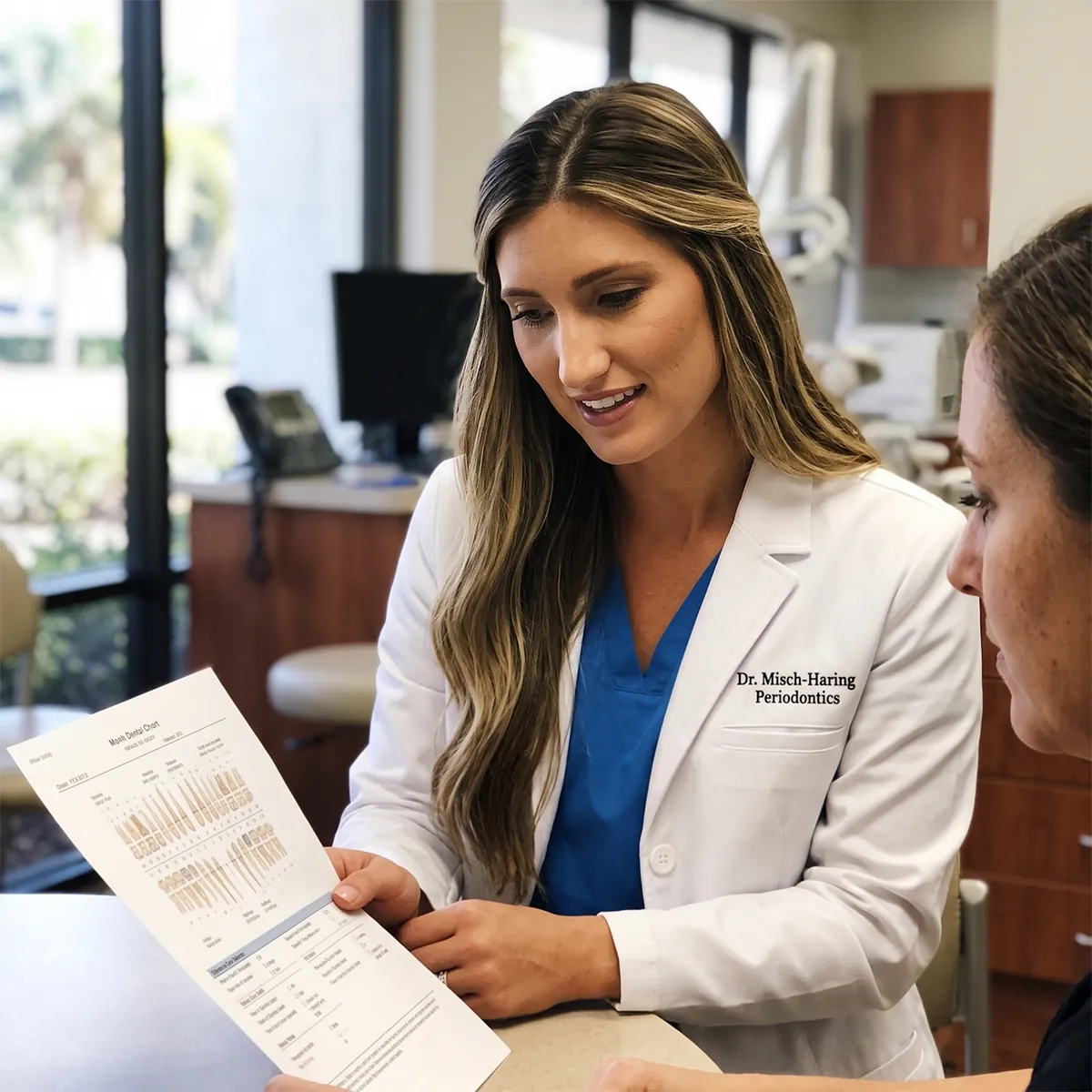
Dr. Maggie Misch-Haring is a board-certified periodontist who performs all gum grafting, along with dental implant surgery and bone grafting, at our Sarasota practice. She’s a co-author on multiple peer-reviewed publications related to periodontal and implant care, and she’s the same specialist who sees you at your follow-up visits, not a rotating provider you meet once and never see again.
What that means practically for recovery: the person who performed your graft is the person reviewing how it’s healing, adjusting instructions if your case needs anything different from the standard timeline, and available if a question comes up along the way. At a family-run practice where the same specialists have treated patients for years, continuity through the recovery period isn’t an afterthought. It’s part of how care here is structured from the start.
Common Questions About Gum Graft Recovery
How painful is gum graft recovery, honestly?
Most patients describe it as uncomfortable rather than severely painful, especially in the first two to three days, and especially if tissue was taken from the palate. Over-the-counter pain relief is usually enough. If your case needs more, Dr. Maggie will prescribe it. Discomfort trends downward quickly after the first week.
How long until I can eat normally again?
Most patients are back to a fully normal diet by four to six weeks, with softer, more limited eating in the first two weeks. Your exact timeline depends on graft type and how the site looks at your follow-up visits.
Why does the graft look pale or whitish right now?
This is a normal, temporary part of healing while the tissue re-establishes its blood supply in the new location. It typically resolves within the first couple of weeks as the graft takes on a healthier color that matches the surrounding gum tissue.
Can I brush my teeth normally during recovery?
You’ll brush everywhere except the graft site itself for the first one to two weeks, using a prescribed or recommended rinse to keep that specific area clean in the meantime. Skipping hygiene everywhere else isn’t recommended and can actually slow healing down.
Does smoking really affect gum graft healing?
Yes, meaningfully. Smoking restricts blood flow to gum tissue, which is exactly what a healing graft depends on. Patients who pause smoking through the recovery window tend to heal faster and with fewer complications than patients who continue through treatment.
What if my case doesn't seem to be following this timeline?
Every recovery has some individual variation, and that’s exactly what follow-up visits are for. If something feels off, or the timeline above doesn’t match what you’re experiencing, call our office rather than waiting to see if it resolves on its own.
Have Questions About Your Own Gum Graft Recovery?
If you’re a current Misch patient with a question about your recovery, please call our office directly rather than waiting for your next visit. If you’re still deciding whether gum grafting is right for you, our gum grafting page covers what the procedure involves and how Dr. Maggie evaluates each case, and a consultation is the best next step to get a straight answer for your specific situation.
Or call us at (941) 957-6444.