
Sarasota’s bone grafting specialists
Bone Grafting: Rebuilding the Foundation for Dental Implants
Here is a hard truth that many dental offices will not tell you immediately: not everyone who wants dental implants has enough bone to support them. If you have been missing teeth for years, if you have worn dentures that pressed against your gums, or if periodontal disease destroyed the bone around your natural teeth, your jaw has likely shrunk. Consequently, the bone that once held your tooth roots has been reabsorbed by your body, leaving a ridge that is too narrow, too short, or too soft for implant placement.
This is where bone grafting changes everything. It is the procedure that turns “you are not a candidate” into “let’s build a foundation for you.” Dr. Craig Misch wrote the textbook on bone grafting, the reference that oral surgeons worldwide consult when planning complex regenerative cases. For this reason, when the dentist who evaluated your case says there is not enough bone, we see an opportunity to rebuild what was lost.
Bone grafting is a category filled with techniques, each designed to treat a specific type of bone deficiency. Whether you need to widen a narrow ridge, preserve bone immediately after an extraction, or create height in your upper jaw, we have the experience and technology to make it happen.
The Biology of Bone Loss After Tooth Extraction
When you lose a tooth, the bone that supported it begins to gradually disappear, and understanding this process is essential to knowing why bone grafting may be necessary.
The Biology of Bone Resorption
The primary function of the jawbone is to support teeth. When a tooth is present, the forces of chewing travel through the root and into the bone, stimulating it to stay strong and dense. When that tooth is removed, the stimulation disappears, causing your body, ever efficient, to begin reabsorbing the now-unnecessary bone and redirecting those minerals elsewhere in the body
This process begins immediately after tooth loss, meaning that in the first year, you can lose up to 25% of the bone width in that area. After five years, you may have lost 50% or more. After a decade of wearing a denture that presses against your gums, the ridge can become so thin that it resembles a knife edge, completely inadequate for implant placement
Bone Density and Volume Requirements for Implant Placement
A dental implant is a titanium post that is surgically placed into your jawbone, and for the implant to succeed, it needs to be surrounded by healthy, dense bone on all sides, typically at least 1 to 2 millimeters of bone around the entire circumference. If the bone is too narrow, the implant will be exposed on one side, and if the bone is too short, the implant might penetrate into your sinus cavity (upper jaw) or damage the nerve canal (lower jaw).
Beyond initial placement, the implant needs bone for long-term stability. During osseointegration, the process by which bone grows around and bonds with the titanium, having adequate bone volume ensures a strong, permanent connection. Insufficient bone means the implant may never fully integrate, leading to failure months or years later
Who Needs Bone Grafting?
You may be a candidate for bone grafting if you have been missing teeth for more than six months and the extraction site has healed poorly, if you have worn dentures for years and your ridge has flattened, if periodontal disease destroyed the bone around your teeth before extraction, if you were born with a naturally thin jaw ridge, if trauma or infection caused bone loss in your jaw, or if a previous implant failed and left a bone defect.
During your consultation, we take a CBCT scan, a three-dimensional X-ray that shows us the exact dimensions and density of your bone. This process tells us precisely where grafting is needed and which technique will give you the best results.
Ridge Augmentation: Rebuilding Jawbone Width and Height
Ridge augmentation is one of the most predictable bone grafting procedures we perform. Here’s how we rebuild jawbone that’s too thin or too short for implants:
What Is Ridge Augmentation?
Ridge augmentation is the procedure we use when the jawbone ridge has become too narrow or too short to support an implant. It is the most common type of bone grafting we perform, and it is often the difference between hearing that “implants are not possible” and leaving with a treatment plan.
The procedure involves placing bone graft material into the deficient area and then covering it with a protective membrane that prevents soft tissue from growing into the graft site. Over the next four to six months, your body integrates the graft material and builds new, living bone in its place, and once the bone has matured, we can place implants with confidence.
Types of Bone Graft Material
If you have lost three or four teeth in a row, we can place two or three implants and connect them with a fixed bridge. This offers the stability of implants without needing a separate post for every individual tooth. The implants serve as a foundation while the bridge fills the space, distributing the chewing force evenly among them.
This approach is more cost-effective than replacing each tooth individually and significantly more stable than a traditional removable partial denture. You can eat steak, bite into apples, and speak clearly without worrying about teeth moving or making noise.
Autograft (Your Own Bone)
Bone harvested from another site in your body, typically the chin, the back of the lower jaw, or occasionally the hip. Autograft is the gold standard because it contains your own living cells, which accelerate healing, and the downside is that it requires a second surgical site, which means additional recovery
Allograft (Donor Bone)
Bone from a human tissue bank, processed and sterilized to remove all cellular material while preserving the mineral structure. Allograft acts as a scaffold into which your own bone grows and eventually replaces, which is a safe, effective process that eliminates the need for a second surgical site.
Xenograft (Animal-Derived)
Bone derived from bovine sources and processed to remove all organic material. Xenograft is highly biocompatible and provides an excellent structure for bone regeneration, especially in larger defects.
Synthetic (Alloplast)
Laboratory-created bone substitutes made of calcium phosphate or other biocompatible materials, which are useful in certain situations but are generally reserved for smaller defects. Dr. Craig or Dr. Maggie will undoubtedly recommend the graft material most suitable for your specific defect. In many cases, we use a combination, such as mixing allograft with your own bone harvested during the same surgery.
The Ridge Augmentation Procedure
Ridge augmentation is performed under local anesthesia or IV sedation, depending on the extent of the grafting and your comfort preferences. The process begins when we make an incision in the gum to expose the deficient bone and prepare the site by creating small perforations in the existing bone, which allows blood and bone-forming cells to access the graft material.
Once done, we place the graft material and shape it to restore the ridge to its proper dimensions, a resorbable or non-resorbable membrane is placed over the graft to protect it during healing, and then we close the gum tissue over the site with sutures.
The entire procedure typically takes one to two hours, depending on the size of the defect, and you go home the same day with care instructions and follow-up appointments already scheduled.
Ridge Augmentation Recovery and Timeline
Expect swelling and mild discomfort in the first week, during which we prescribe pain medication, antibiotics, and an antimicrobial rinse. Most patients return to work within two to three days, although strenuous activity should be avoided for two weeks.
The bone graft needs four to six months to fully mature before we can place implants, and during this time you will have follow-up appointments to monitor healing. We may take additional X-rays to assess bone density before proceeding to implant surgery.
Ridge Augmentation Cost
Ridge augmentation at our practice ranges from $1,500 to $4,000, depending on the size of the defect and the type of graft material used. Larger defects requiring autograft (your own bone) from the chin or ramus are at the higher end, while smaller defects using allograft are at the lower end.
This cost is separate from the implant surgery itself, and we provide a comprehensive treatment plan with all costs itemized so there are no surprises.
Socket Grafting: Preserving Bone at the Time of Extraction
The smartest way to avoid bone loss is to act the moment the tooth is removed, as socket grafting preserves the natural foundation of your jaw for future implants.
What Is Socket Grafting?
Socket grafting, also called alveolar preservation or ridge preservation, is a proactive procedure performed immediately after a tooth extraction. Instead of letting the empty socket heal on its own, which results in significant bone loss, we fill it with bone graft material to maintain the ridge dimensions.
To help you understand, think of it as preventive bone grafting: by preserving bone at the time of extraction, we often eliminate the need for more extensive ridge augmentation later. It is a faster, less invasive, and less expensive process than rebuilding bone after it has already been lost.
Why Socket Grafting Matters
When a tooth is extracted, the body immediately begins to resorb the bone that surrounded the root. The socket walls, particularly the thin outer wall, can collapse inward in just a few weeks. Three to six months after extraction, you may have lost 30-50% of the bone width, and in one year, the ridge may be too narrow for standard implant placement.
Socket grafting prevents this collapse, as the graft material supports the socket walls, maintains blood supply to the area, and provides a scaffold for new bone formation. When you are ready for an implant three to four months later, the bone will be dense, well-shaped, and ready.
The Socket Grafting Procedure
Socket grafting is performed immediately after we extract the tooth, which adds only 10 to 15 minutes to the extraction appointment, and once the tooth is removed, we thoroughly clean the socket, removing any infected tissue or debris.
We place bone graft material (typically allograft or xenograft) into the socket, filling it to the level of the surrounding bone. Once done, a collagen membrane or plug is placed over the graft to protect it and promote soft tissue healing. In some cases, we also place a few sutures to secure the membrane.
You leave the appointment with the socket grafted and protected, ready to heal over the next three to four months.
Socket Grafting Recovery
Recovery from socket grafting is essentially the same as recovery from a standard extraction. Expect some swelling and discomfort for three to five days, which is usually manageable with over-the-counter pain medication, and you will be able to eat soft foods for a few days, which will avoid disturbing the graft site.
The graft material is covered by your gum tissue within two to three weeks, and full bone maturation takes three to four months, at which point we can place the implant.
Socket Grafting Cost
Socket grafting at our practice costs $500 to $800 per extraction site, which includes the graft material, membrane, and additional surgical time. Given that it can prevent the need for a $2,000 to $4,000 ridge augmentation later, socket grafting is one of the smartest investments you can make in your future dental health.
When to Choose Socket Grafting vs. Immediate Implant
If you know you want an implant and the conditions are right, we can sometimes place the implant immediately after extraction, with no need for a separate grafting appointment. This is called immediate implant placement, and it is ideal when the socket is intact with good bone on all sides, there is no active infection, and you have adequate bone beyond the socket for primary stability.
However, if the socket walls are damaged, there is infection present, or you are not sure about your implant timeline, socket grafting is the safer choice, as it preserves your options and gives you flexibility to decide about implants later.
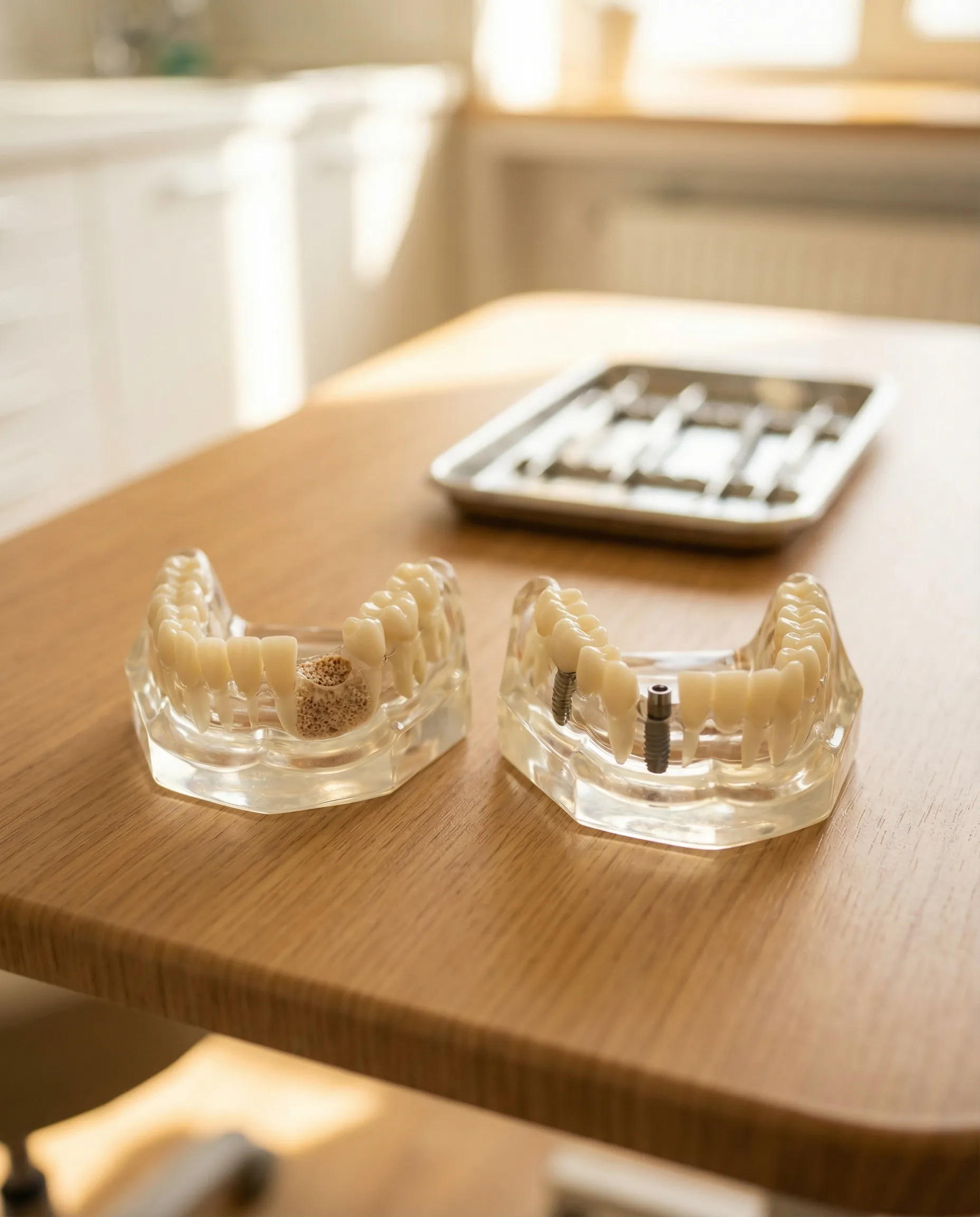
Sinus Lift: When Upper Jaw Height Is Insufficient
If you have lost your upper back teeth, your maxillary sinuses (the air-filled cavities above your upper jaw) may have expanded downward, occupying the space where tooth roots used to be, which leaves insufficient bone height between your mouth and your sinus cavity for implant placement.
A sinus lift, also called sinus augmentation, resolves this by gently elevating the sinus membrane and placing bone graft material underneath, creating the height needed for stable implants. It is one of the most common procedures we perform for upper jaw implant candidates.
Since a sinus lift is a specialized procedure with its own candidacy requirements, recovery timeline, and considerations, we have created a dedicated page with comprehensive information.
Your Bone Grafting Surgeons
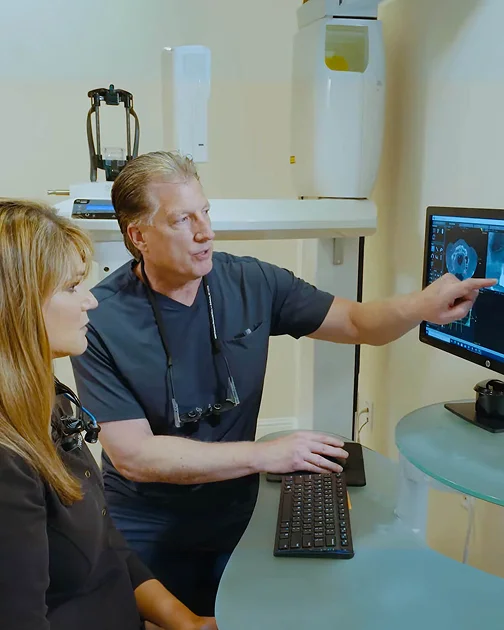
You will be treated by specialists who are world references, ensuring your surgery is performed with maximum precision and safety.

25+
Years of Clinical Excellence in Sarasota
Dr. Craig Misch: The Textbook Author
When oral surgeons around the world need guidance on complex bone regeneration cases, they turn to the textbooks Dr. Craig Misch wrote. His research on bone grafting techniques, growth factors, and guided tissue regeneration has shaped modern implant dentistry, as he pioneered many of the techniques used today.
Dr. Craig is triple board-certified: Prosthodontist, Oral Surgeon, and Implantologist. This combination means he understands not just how to rebuild bone, but how that bone will support the final restoration: he plans backward from your ideal smile to ensure the grafted bone is positioned exactly where it needs to be.
Dr. Maggie Misch-Haring: Periodontal Expertise
Dr. Maggie completed a three-year residency where she focused on bone regeneration, gum grafting, and the management of complex periodontal defects. As a board-certified Periodontist, she specializes in the hard and soft tissues that support teeth and implants, and performs all bone grafting procedures with meticulous attention to tissue handling, since the way we manage your gums directly affects how well the underlying bone heals.
Dr. Maggie also brings expertise in growth factors and biologics that can accelerate bone regeneration, and when appropriate, she incorporates platelet-rich fibrin (PRF) derived from your own blood to enhance healing.
Bone Grafting FAQs
It is natural to have questions before a surgical procedure. That is why we have gathered the answers to the most common questions here to ensure you feel safe and well-informed:
Is bone grafting painful?
During the procedure, you will be completely numb with local anesthesia, and many patients choose IV sedation for additional comfort. Afterward, you can expect some soreness and swelling for five to seven days. Most patients manage well with prescription pain medication for the first two to three days and then transition to over-the-counter ibuprofen. The discomfort is comparable to a tooth extraction.
How long does bone grafting take to heal?
Socket grafts typically mature in three to four months, and ridge augmentation requires four to six months for the bone to fully integrate and gain density. During this time, you will have follow-up appointments and X-rays to monitor healing, and we will not place implants until the bone is ready, as patience at this stage guarantees long-term success.
What is the success rate of bone grafting?
Bone grafting has a success rate of 95% or higher when performed by experienced surgeons using appropriate techniques. Factors that improve success include not smoking (or quitting before surgery), good oral hygiene, following post-operative instructions, and allowing for adequate healing time before implant placement.
Can I get bone grafting if I smoke?
Smoking significantly impairs bone healing and increases the risk of graft failure. Therefore, we strongly encourage patients to quit smoking, or at a minimum reduce to fewer than five cigarettes per day, for at least two weeks before and eight weeks after surgery. If you cannot quit, we will discuss your options honestly and may recommend alternative approaches.
What if the bone graft fails?
Graft failure is uncommon but can occur, usually due to infection, smoking, or premature loading. If a graft does not integrate properly, we remove the failed material, allow the site to heal, and typically attempt a second graft with modifications to the technique, which usually results in a successful graft with a revised approach.
Is bone grafting covered by insurance?
Many dental insurance plans cover a portion of bone grafting when performed in preparation for implants. Coverage varies widely, as some plans cover 50% up to an annual maximum while others exclude grafting entirely, and whenever necessary, we provide detailed documentation for you to submit to your insurance company for reimbursement.
Schedule Your Bone Grafting Consultation
If you’ve been told you don’t have enough bone for implants, don’t give up. Bone grafting has made implants possible for thousands of patients who were initially turned away, and during your consultation, we’ll take a CBCT scan, evaluate your bone deficiency, and create a personalized treatment plan that rebuilds your foundation for a lifetime of dental health.
Patients travel to our Sarasota practice from across Florida and beyond for full arch restoration. Whether you are in Longboat Key, Lakewood Ranch, Tampa, or Orlando, we will work with you to coordinate appointments and minimize the number of trips required
Office Location:
Misch Implant & Aesthetic Dentistry
120 South Tuttle Avenue
Sarasota, FL 34237