
Nobody wants or would even like to lose a tooth, and we certainly do not want to remove one unless there is no other option. At Misch Implant & Aesthetic Dentistry our philosophy has always been preservation first, so if a root canal, crown, or periodontal treatment can save your tooth, we will tell you that honestly, even if it means we will not perform the surgery.
But sometimes, despite everyone’s best efforts, a tooth reaches the point of no return: infection has spread too deeply, the fracture extends below the bone, or periodontal disease has destroyed the foundation. When that happens, extraction is undoubtedly the first step toward healing.
What differentiates our practice is what happens during and after the extraction. Dr. Craig Misch and Dr. Maggie Misch-Haring are not just removing a problem, they are already thinking about your future: will you need an implant? Should we preserve the bone with socket grafting? Can we place an implant the same day? Since we are specialists in both surgery and tooth replacement, every extraction is performed with your long-term outcome in mind, which means you are not just getting a tooth pulled, but receiving a plan.
Not every tooth can be saved, and recognizing this early can spare you from unnecessary treatments and prolonged pain. Here are the most common situations where extraction becomes the best option:
A cavity starts small, a minor defect in the enamel that a simple filling can fix, but if decay is not treated it spreads, first into the dentin, then into the pulp chamber where the nerve lives, and eventually into the root and surrounding bone. When infection reaches this stage you are facing severe pain, swelling, and an abscess that antibiotics alone cannot resolve.
We always evaluate whether a root canal can save the tooth, but there are also limits. If decay has destroyed more than 60 or 70% of the tooth structure, there is simply nothing left to restore since a crown needs a healthy tooth underneath it. When the foundation is gone, extraction followed by an implant offers a better long-term outcome than trying to rebuild what cannot be rebuilt.
Not all fractures are created equal. A small chip on the biting surface? Usually repairable with bonding or a crown. A crack that extends through the tooth but stays above the gum line? Often salvageable with a root canal and crown, but a vertical root fracture, one that runs down the length of the root into the bone, is a completely different story.
Vertical root fractures are particularly frustrating because the tooth might look good on X-rays initially, while the patient has vague discomfort, perhaps some gum swelling, but nothing dramatic. Then one day the fracture propagates, bacteria colonize the crack, and suddenly you have an infected tooth that no amount of treatment can save. When we diagnose a vertical root fracture, extraction is the only option left.
Periodontal disease does not destroy teeth directly, but destroys the bone and gum tissue that hold teeth in place. As the disease progresses, teeth become loose, first with a little movement and then with a lot, until eventually the tooth is hanging by a thread, painful to chew on, and serving as a reservoir for the bacteria that caused the problem in the first place.
Dr. Maggie Misch-Haring, our periodontist, works closely with patients to save teeth affected by gum disease whenever possible, as scaling and root planing, gum grafting, and bone regeneration can stabilize many cases. But when a tooth has lost more than 75% of its bone support the prognosis is poor, and extracting the tooth and treating the infection gives your mouth a chance to heal and allows us to plan for a stable implant replacement once the disease is controlled.
Sometimes teeth that have undergone multiple procedures, such as root canals, crowns, and re-treatments, eventually reach a point where further intervention is not practical. A tooth that has had a root canal twice and now has a new infection at the tip of the root may be better served by extraction and implant replacement than by yet another attempt at saving it, so we will be honest with you about the odds. If we think more treatment is just delaying the inevitable, we will tell you.
For patients transitioning to All-on-4 full arch restoration, extraction of remaining failing teeth is part of the treatment plan. Instead of investing money in individual teeth that are declining, some patients reach a point where it makes more sense to extract what is left, place implants, and start fresh with a complete set of fixed teeth, and in these cases extractions are performed on the same day as implant placement, so you leave with a new smile, not with an empty mouth.
We turn what many fear into a predictable and calm procedure, as our approach prioritizes your comfort and the bone preservation needed for your future smile.
Every extraction begins with a thorough evaluation where we will review your medical history, take X-rays (or CBCT scans for complex cases), and examine the tooth in question. Most importantly, we will explain why extraction is necessary or, if we believe the tooth can be saved, what alternative treatments might work.
We will also discuss what comes next since if you plan to replace the tooth with an implant, we will talk about socket grafting to preserve bone and whether immediate implant placement can be an option, taking every care to plan your oral health in the best way possible.
To make the procedure completely comfortable, a local anesthetic is used before starting the extraction, and for those suffering from anxiety, we offer multiple sedation options, from nitrous oxide to IV sedation, to ensure you feel completely at ease. Once you are fully relaxed, Dr. Craig Misch / Dr. Maggie Misch-Haring will gently loosen and remove the tooth using advanced tools and techniques.
We focus on removing problematic teeth with precision and care using state-of-the-art techniques, ensuring the preservation of surrounding bone tissue and providing a level of expertise beyond what is typically available in general dental practice. Most extractions, whether involving a single tooth or multiple teeth, can typically be completed in one visit, ensuring the process remains convenient and stress-free.
After the extraction you will receive comprehensive aftercare instructions to manage any post-procedure swelling or bleeding, although most patients experience only moderate discomfort for three to five days, which is typically manageable with over-the-counter ibuprofen for most people. However, if necessary, we prescribe something stronger for pain management.
Days 1-3
Some swelling and tenderness are normal, so apply ice packs intermittently, eat soft foods, and avoid disturbing the extraction site.
Days 4-7
Discomfort decreases significantly and you can gradually return to normal foods, avoiding anything hard or crunchy directly over the extraction site.
Weeks 2-3
Soft tissue heals completely, and if you received stitches they will dissolve on their own or be removed at your follow-up appointment.
We make sure to prepare the best foundation for your smile of tomorrow. Here is how we ensure you are ready for the next step:
When a tooth is extracted the surrounding bone begins to shrink, sometimes losing 30 to 50% of its width in the first year, so if you plan to replace the tooth with an implant, preserving that bone is critical. That is why we frequently recommend socket grafting at the time of extraction, which involves placing bone graft material into the empty socket to maintain the ridge dimensions.
Socket grafting adds only 10 to 15 minutes to the extraction procedure and costs a fraction of what ridge augmentation would cost later, so if you know you want an implant eventually, socket preservation is one of the smartest investments you can make.
In some cases we can place an implant immediately after extracting a tooth during the same appointment, which is called immediate implant placement (or what we call the “same-day tooth” approach), and is ideal when the extraction site has good bone on all sides, there is no active infection, and you have adequate bone beyond the socket for primary stability.
Immediate placement reduces total treatment time and often eliminates the need for a separate bone grafting procedure, although not everyone is a candidate. We will evaluate your specific situation and let you know if this approach makes sense for you.
A missing tooth is not just a cosmetic issue, since the teeth on either side can shift into the empty space, the opposing tooth can over-erupt, and your bite changes, which can lead to jaw pain and uneven wear on remaining teeth. For most patients we recommend replacing extracted teeth, and the gold standard is a dental implant.
Depending on your situation, we can also discuss dental bridges (which use adjacent teeth for support) or partial dentures (removable appliances that replace multiple teeth), and during your extraction consultation we will outline all your options and help you choose the approach that fits your goals, timeline, and budget.
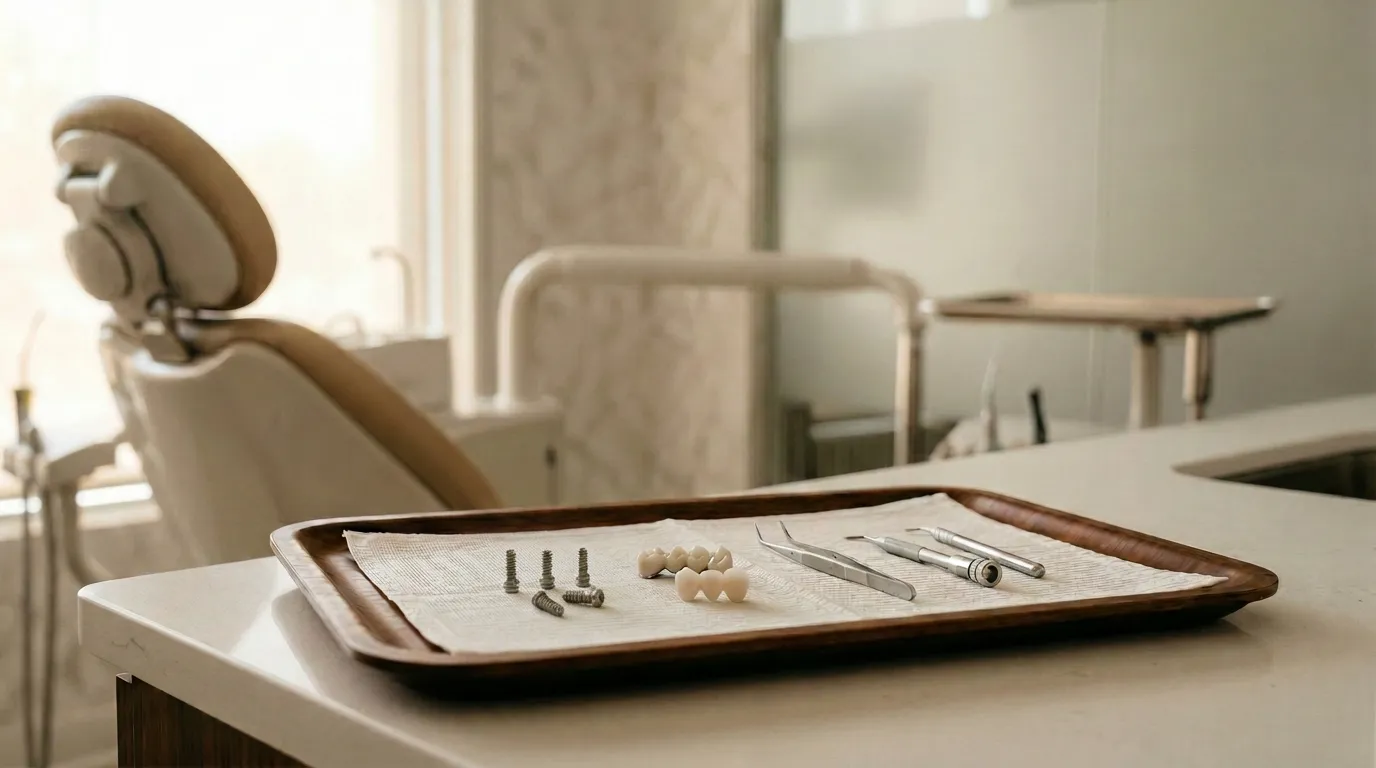
Here at Misch, we handle the entire recovery and replacement process with an integrated team of specialists.
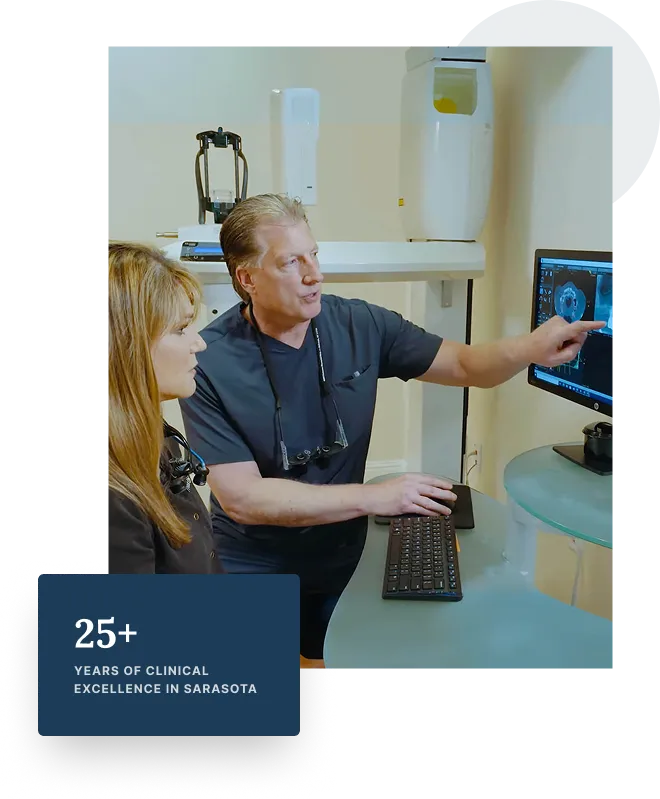
In most dental offices, if you need an extraction it is done in isolation and nobody is thinking about what happens next. At Misch we are already planning your implant while removing the failing tooth, since Dr. Craig / Dr. Maggie coordinate with Dr. Katherine and Dr. Harry to ensure your extraction prepares you for the best restoration possible.
Your extraction, bone grafting, periodontal treatment, and eventual implant are all coordinated from day one, which means you never have to explain your history twice and never wonder if your surgeon and restorative dentist are on the same page because they are literally working in the same room.
We do not extract teeth to bill for implants, so if your tooth can be saved we will tell you, even if it means we miss out on the surgery. We have seen many patients who were told their teeth were “hopeless” by other professionals only to find out that proper treatment could have avoided extraction entirely, since extraction is a last resort and we will be honest with you about whether you have, in fact, reached that point.
It is natural to have doubts or fears about removing a tooth. Here are direct answers to the most common questions we receive from patients.
Not during the procedure, since with local anesthesia you will feel pressure but no pain, and with IV sedation you will not be aware of the procedure. Afterward expect moderate discomfort for three to five days, and most patients compare this to the pain after a minor dental procedure.
Extraction costs vary depending on complexity, and we will provide a detailed estimate during your consultation. If you add socket grafting to preserve bone for a future implant, that is an additional investment, but one that can prevent much more expensive bone reconstruction later.
Most patients stick to soft foods for three to five days, and by the end of the first week you can usually return to most normal foods, avoiding anything extremely hard or crunchy directly over the extraction site for another week or two.
If you plan to replace the tooth with an implant, we strongly recommend socket grafting at the time of extraction, since it is much easier and less expensive to preserve bone than to rebuild it later. If you are getting a bridge or will not replace the tooth, grafting is optional.
In many cases, yes. If the extraction site is healthy and there is adequate bone for stability, we can often place an implant immediately (what we call the “same-day tooth” approach), and we will evaluate your specific situation during your consultation.
If you have been told you need a tooth extracted, or if you are dealing with pain, swelling, or a tooth you suspect cannot be saved, we are here to help. During your consultation we will evaluate your situation, explain all your options, and give an honest assessment of what is best for your long-term oral health.
Dr. Craig Misch / Dr. Maggie Misch-Haring will collaborate with you to plan your smile restoration before proceeding with the extraction, and if the bone surrounding the tooth socket is healthy, a dental implant can be placed on the same day of removal. This “same-day tooth” approach allows you to leave the office with a restored smile, even when multiple teeth are removed. Although in some cases immediate placement is not recommended, we will advise allowing time for healing before moving forward with implants, ensuring the best long-term results.