
Sarasota's Dental Implant Specialists
When you lose a tooth, whether from an accident, decay, or maybe because it never fully developed, the problem goes far beyond appearance. You may face bone loss that increases month after month, your surrounding teeth shift into the empty space and your bite loses its balance. If you need a dental implant, you are not likely looking for the cheapest or fastest option, but rather a surgeon who will do it right the first time so that the problem doesn’t last for the rest of your life.
That is exactly what we do here at Misch. Dr. Craig Misch and Dr. Maggie Misch-Haring are two board-certified specialists who have dedicated their careers to surgical excellence. Patients travel to our Sarasota practice from all over the United States (from New York to California) because we are often the last option after a failed implant done elsewhere. When you need an implant placed correctly (because the foundation matters as much as the tooth itself), you come to an office where the surgeon wrote the textbook with the techniques that other dentists study.
Dental implants have become the preferred treatment because they are the only option that replaces both the root and the crown of the tooth. This process preserves bone structure, protects neighboring teeth, and restores full function.
A dental implant works differently from a bridge or denture, as it is a titanium post acting as an artificial root, surgically placed into the jawbone. Over the next three to six months, your bone grows around this post through a process called osseointegration, creating a foundation as strong as the original tooth. Once the implant is fully integrated, we attach an abutment and a custom crown that looks, feels, and functions exactly like a natural tooth.
Compare this to a bridge, which requires grinding down two healthy neighboring teeth to serve as anchors. These teeth are permanently altered, and the bridge itself typically needs replacement every ten or fifteen years. A denture, on the other hand, sits on top of your gums and moves when you chew, doing nothing to prevent the bone loss that eventually makes your face look sunken. An implant is different: it preserves your bone, protects your remaining teeth, and fully restores your chewing function.
We see patients from every corner of the country. Some fly in from New York or Chicago because their local dentist recommended a "mini implant" that failed within two years. Others drive from Tampa or Fort Myers because they were quoted $60,000 for a full mouth reconstruction at a corporate chain, and they want a second opinion from someone who isn't working on commission. Still others come because they've done their research, read Dr. Craig Misch's textbooks, and realized that the surgeon teaching other dentists how to do bone grafting is right here in Sarasota.
What they all have in common is this: they understand that an implant is a decades-long investment, not a quick fix, and because of this, they would rather travel a few hours and have the procedure done correctly than settle for a general dentist who places a few implants per year as a side service. When the foundation of your smile is at stake, you don't compromise.
We believe that true dental excellence unites scientific precision and absolute integrity. Therefore, we plan every detail ethically to ensure your oral health thrives for decades to come.
Here is something most corporate dental chains won’t tell you: not every tooth that can be extracted should be extracted. If a tooth can be saved with a root canal, we will tell you that honestly, even if it means we won’t place an implant.
We’ve seen many cases where a patient was told their tooth was “hopeless,” only to discover that a competent endodontist could have saved it. Once a tooth is gone, it is gone forever. We believe in preservation first, and replacement only when absolutely necessary.
That said, if your tooth truly is failing (if it has a vertical root fracture, advanced bone loss, or a crown-to-root ratio that makes it unsalvageable, for example) then an implant is the right choice. And when that time comes, we will ensure it is done correctly.
Every implant case at our practice begins with a CBCT scan: first, a three-dimensional X-ray that shows us the exact anatomy of your jawbone, the location of your nerves and sinuses, and the density of your bone at the proposed implant site. This is not the flat, two-dimensional X-ray you would get at a general dentist, but rather, a complete map of the patient’s oral anatomy.
We use this data to create a custom surgical guide, which works like a stencil, ensuring the implant is placed at the exact angle, depth, and position planned in the digital model. During surgery, we don’t work by “eyeballing it” or by guesswork. The guide fits perfectly over your teeth or gums, and the drill follows the pre-planned path with millimeter precision. This accuracy is crucial because a poorly angled implant can fail or require a custom abutment that costs thousands of dollars extra.
Osseointegration is the process by which your bone physically bonds to the titanium implant. Titanium is biocompatible, meaning your body does not treat it as a foreign object. Over three to six months, cells called osteoblasts (responsible for creating new bone) grow directly onto the implant surface, forming a connection stronger than the original tooth root.
That is why we do not rush this process. Some clinics try to place the crown immediately on the implant, and in certain cases like All-on-4 for example, this is appropriate. But for individual posterior implants, we wait for full osseointegration before installing the final crown. Patience here means longevity later.
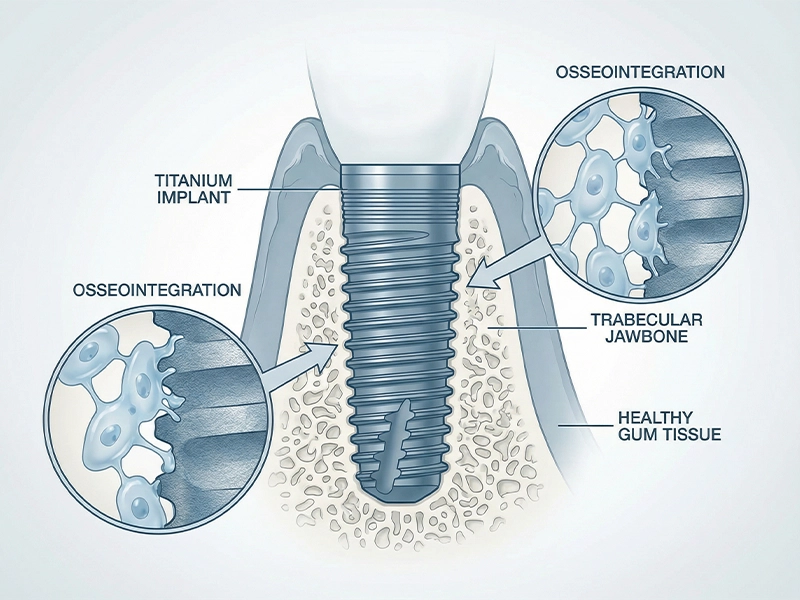
The right implant approach for you depends on how many teeth are missing and the health of the bone that supports them. Here are the main options we offer.
If you have lost a tooth, whether it is a front tooth knocked out in an accident or a back molar that cracked and needed to be removed, a single implant is the ideal solution. We place the titanium post into the empty space (or into bone that we grafted if the site did not heal well). After osseointegration is complete, we attach a custom crown that perfectly matches the color, shape, and size of your natural teeth.
Unlike a bridge that requires grinding down the two teeth next to it, the single implant stands alone and your neighboring teeth remain intact. And because the implant stimulates the bone in the same way a natural root does, you avoid the bone loss and gum recession that happen with conventional bridges.
Initial surgery, 3 to 6 months of healing, abutment placement and final crown. Total time: 4 to 7 months.
$4,000 to $6,000 (includes surgery, abutment, and crown)
If you have lost three or four teeth in a row, we can place two or three implants and connect them with a fixed bridge. This offers the stability of implants without needing a separate post for every individual tooth. The implants serve as a foundation while the bridge fills the space, distributing the chewing force evenly among them.
This approach is more cost-effective than replacing each tooth individually and significantly more stable than a traditional removable partial denture. You can eat steak, bite into apples, and speak clearly without worrying about teeth moving or making noise.
If you are facing the loss of most or all of your teeth, whether from advanced gum disease, severe decay, or failed root canals, a full arch restoration may be the best option. This is often called “All-on-4” or “teeth in a day,” and involves placing four to six strategically positioned implants per arch, and then attaching a fixed prosthetic bridge on the same day.
It is important to remember that this is not a denture, but rather, a permanent, screw-retained prosthesis that does not come out. You brush it like natural teeth, sleep with it in place, and never worry about denture adhesives or slipping during dinner, meaning it is the closest thing to having your natural teeth back.
Because this is such a comprehensive procedure (and because it is the cornerstone treatment we are known for), we have created a dedicated page with detailed information, cost breakdowns, and patient testimonials specifically for full arch cases.
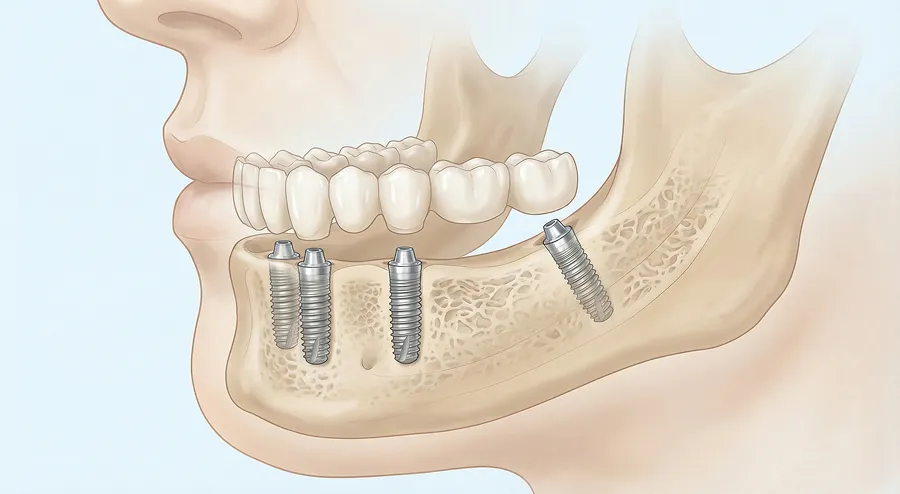
Our expertise in bone regeneration creates the solid foundation necessary to ensure your implant lasts a lifetime.
Here is the reality: if you have been missing a tooth for more than a year, your jawbone has likely resorbed and shrunk in that area. Bone is living tissue, and without the stimulation of a tooth root, your body reabsorbs the bone and redirects those minerals elsewhere. This process happens quickly, and typically, within one year after tooth loss, you can lose up to 25% of the bone width in that area.
If there isn't enough bone to support an implant, we rebuild it. This process is called bone grafting, and it is one of the procedures Dr. Craig Misch pioneered. In fact, his textbook on bone grafting is the definitive reference that oral surgeons worldwide consult when planning complex cases.
Ridge augmentation is used when the jawbone ridge has become too narrow or too short to support an implant. To help with this process, we place bone graft material from your own body, a tissue bank, or a synthetic source into the deficient area and cover it with a protective membrane. Over the next four to six months, your body integrates the graft material and builds new bone. Thus, once the bone has matured, we can place the implant.
If you have lost upper back teeth, your maxillary sinuses (the air-filled cavities above the upper jaw) may have expanded downward into the space where the tooth roots used to be. This leaves insufficient bone height for an implant. A sinus lift involves carefully elevating the sinus membrane and placing bone graft material underneath it, increasing the bone height and allowing for stable implant placement.
If we are extracting a compromised tooth and you know you will want an implant in the future, the smartest decision is to place bone graft material into the empty space immediately after extraction. This process is called socket preservation, and it prevents the bone from collapsing as it heals. Two to six months later, when the graft has consolidated, we can place the implant without needing a more extensive grafting procedure.
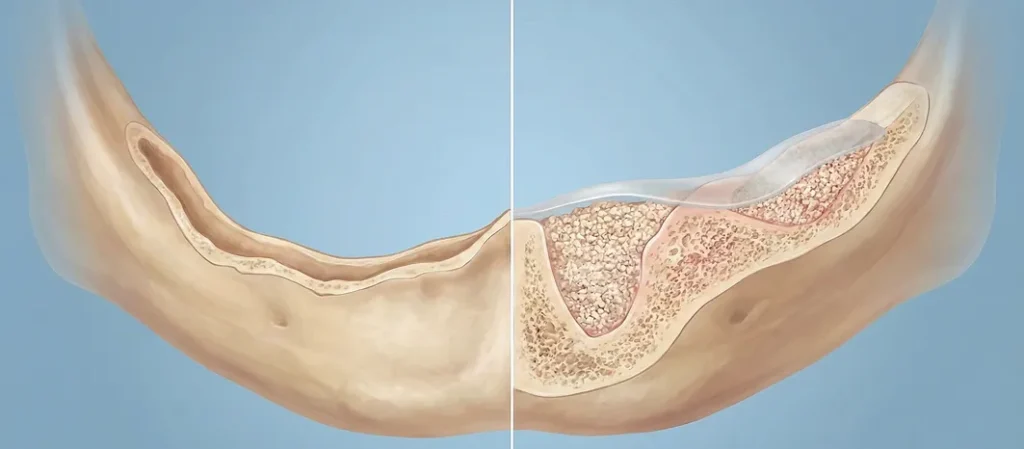
Knowing what happens at each stage helps reduce anxiety and create realistic expectations. Here is exactly how the implant process works from start to finish.
Your first visit is about understanding your goals and determining if you qualify for one or more implants. We take a full set of X-rays, a CBCT scan if needed, and photographs of your smile. Dr. Craig or Dr. Maggie will examine your gums, check your bite, and assess the condition of your remaining teeth. If you have active gum disease, we will need to treat that first, because placing an implant in diseased tissue is like building a house on a crumbling foundation.
We also discuss your medical history, as certain conditions like uncontrolled diabetes, heavy smoking, or recent radiation therapy to the jaw can affect osseointegration and require modifications to the standard protocol. We won't say you aren't a candidate just because the surgery would be slightly more complicated, but we will figure out how to make it work.
On the day of surgery, you will have sedation options of either local anesthesia (you are awake but numb) or IV sedation (you are in a twilight state and will not remember the procedure). Most patients choose IV sedation for implant surgery because it eliminates anxiety entirely. Once you are comfortable, we make a small incision in the gum to access the bone and use a series of precisely sized drills to create a channel for the implant. The surgical guide ensures the drill follows the exact planned path. We place the titanium implant into the bone, and if primary stability is excellent (meaning the implant is rock-solid immediately), we may attach a temporary crown that same day. If the bone is softer or if we perform grafting simultaneously, we close the gum over the implant and let it heal undisturbed for a few months. The surgery itself typically takes 30 to 60 minutes per implant. If you are placing multiple implants, we adjust the schedule accordingly.
For the next three to six months, osseointegration is happening beneath your gums, meaning your bone is growing around the titanium post, creating a permanent bond. During this time, you will have a temporary tooth or bridge in place (either removable or attached to adjacent teeth) so you are never without a tooth in a visible area.
After that, you will come back for follow-up appointments so we can check your healing and ensure there are no signs of infection or complications. Most patients experience minimal discomfort during the osseointegration phase, as it is the initial week after surgery that requires some care.
Once osseointegration is complete, you return for a minor procedure where we attach the abutment (a connector piece that sits on top of the implant and holds the final crown). This is usually done under local anesthesia and takes about 30 minutes. Your gums need a week or two to heal around the abutment, then we take a digital impression (no uncomfortable trays) and send it to the ceramist.
Two weeks later, you return for the final crown. We check the fit, adjust the bite, and ensure the color matches your natural teeth perfectly. When we are both satisfied, the crown is permanently cemented or screwed into place. Done. You now have a tooth that will last decades.
An implant can last the rest of your life, but that only happens if you care for it properly. Here is what you need to know to protect your investment.
The crown on your implant cannot get cavities because it is made of porcelain or zirconia, but the gum tissue around the implant is still living tissue that can become infected. This condition is called peri-implantitis and is the leading cause of late-stage implant failure.
Prevent this by brushing twice a day, flossing around the implant crown exactly as you would a natural tooth, and using an antibacterial mouthwash if Dr. Maggie recommends it. If you have a history of gum disease, we may recommend more frequent cleanings (every three or four months instead of every six).
Natalie Rosbury, RDH, our registered dental hygienist, specializes in implant maintenance. She uses instruments specifically designed for implants (they won't scratch the titanium or porcelain) and checks for early signs of inflammation or bone loss around the implant. Catching peri-implantitis early means treatment with a deep cleaning and antibiotics, whereas catching it late means the implant might fail and need to be removed.
Your maintenance visits are not optional, as they are part of the commitment when you invest in an implant. We have placed implants that are still functioning perfectly after twenty-five years, and the common thread among those patients is this: they never missed a maintenance appointment.
Implant failure is rare (success rates above 95% for standard cases), but it happens. The most common causes are:
Financial transparency is part of the respect we have for our patients. Here is everything you need to know about costs, insurance, and how to make your treatment viable.
A single tooth implant at our practice ranges from $4,000 to $6,000, including surgical placement, the abutment, and the final custom crown. If you need bone grafting, add another $1,500 to $3,000 depending on the complexity.
These numbers might seem high compared to a $1,500 bridge, but consider this. A bridge lasts ten to fifteen years and requires grinding down two healthy teeth. An implant lasts twenty-five years or more and preserves your natural tooth structure.
When you divide the cost by the lifespan of the implant, it is actually the most economical option. And that is without counting the intangible value of being able to eat whatever you want, speak clearly, and smile without embarrassment.
You might see offices advertising “$999 implants” on billboards along I-75. However, that is just the surgical placement. The abutment costs extra, as does the crown and bone grafting. In the end, you are paying $3,500, and the surgery was performed by a general dentist who places implants as a side service, not by someone who dedicated their entire career to this.
We do not play pricing games as the fee we quote is the final fee and includes everything. Most importantly, you are paying for the skill of a surgeon with over 30 years of experience. Dr. Craig has placed thousands of implants over three decades, and Dr. Maggie completed years of additional training beyond dental school specifically in surgical techniques. Therefore, when they place an implant, it is not a learning experience but a refined and repeatable process they could do in their sleep.
We are a fee-for-service practice, which means we do not participate in insurance networks. However, many patients receive partial reimbursement by submitting our detailed fee breakdown (superbill) to their insurance company as an out-of-network claim. Dental insurance companies typically cover 50% of the implant cost, up to the annual maximum (often $1,500 to $2,000). We provide everything necessary for you to submit the claim.
We also work with healthcare financing companies that offer payment plans with 0% interest for qualified applicants. You can finance the total cost of treatment and pay it off in 12, 18, or 24 months with no interest. If you do not qualify for 0%, we still have extended payment plans with competitive rates available.
Payment is expected at the time of service. We accept cash, checks, and all major credit cards.
Understanding the structural differences between each option reveals why implants are the only solution capable of permanently preserving your oral health and bone structure.
A traditional dental bridge is a three-unit restoration: two crowns on either side of the gap, connected to a fake tooth in the middle. To place a bridge, we have to permanently grind down the two adjacent teeth, removing enamel and dentin so the crowns fit over them. Once done, the problem is created: these teeth are now compromised forever. If one of them develops decay or a fracture, the entire bridge fails.
Bridges typically last ten to fifteen years, and after that, you need a new bridge. And if you lose one of the supporting teeth, you are looking at an even more expensive fix, possibly implants to replace all three teeth.
An implant, by contrast, stands alone, as your adjacent teeth remain completely untouched. The implant itself can last a lifetime, and the crown on top may need replacement every 15-20 years due to normal wear, but that is a $1,500 crown replacement, not a $5,000 bridge replacement.
Dentures are removable prosthetics that sit on top of your gums. They are held in place by suction (upper dentures) or by resting on your gum ridge (lower dentures). Most people hate them because they slip when you eat, require messy adhesives, and do not prevent bone loss. In fact, dentures accelerate bone loss because they put pressure on your gums, which causes the bone underneath to resorb even faster.
After ten years of wearing a conventional denture, many patients have lost so much bone that their dentures no longer fit at all. They are constantly going back for relines and adjustments, and eventually, they are facing a full mouth reconstruction that is far more expensive than if they had just gotten implants in the first place.
If you are missing all your teeth and want a removable option, we offer implant-supported overdentures, a denture that snaps onto two or four implants. This provides much better stability than a conventional denture and slows down bone loss. But if you want the best possible outcome, a full arch restoration with fixed implants is the gold standard.
We believe transparency is essential when making decisions about your long-term health. Here are direct answers to the questions our patients ask most frequently:
With proper care, dental implants can last 25 years or more, often a lifetime. The titanium implant itself rarely fails once it is fully integrated. The crown on top may need replacement every 10-20 years due to normal wear, chipping, or staining, but replacing a crown is a straightforward and relatively inexpensive procedure. We have seen implants that Dr. Craig placed in the 1990s that are still functioning perfectly today.
During surgery, you are fully numb with local anesthesia, and many patients opt for IV sedation, meaning you are not aware of the procedure at all. Afterward, you will have some soreness for three to five days. Most patients compare it to the feeling after a tooth extraction, and given that, over-the-counter ibuprofen is usually sufficient to manage the discomfort. We also prescribe antibiotics to prevent infection and, if needed, a stronger pain medication for the first few days.
Dr. Craig and Dr. Maggie have refined their surgical techniques over decades to minimize trauma to the surrounding tissue, which significantly reduces post-operative discomfort, and most patients are back to work within two to three days.
This is one of the most common reasons patients seek a second opinion with us. Many general dentists lack training in bone grafting, so when they see inadequate bone, they assume implants are off the table. But in reality, we can rebuild bone using techniques like ridge augmentation, sinus lifts, and guided tissue regeneration.
Dr. Craig has successfully placed implants in patients who were told by other providers that implants were “impossible.” It takes more time and planning, typically four to six months for the graft to mature before we can place the implant, but it is absolutely possible in the vast majority of cases.
It depends on the implant location and your bone quality. For front teeth (where aesthetics matter), we almost always place a temporary crown on the same day as the implant. For back teeth, where chewing forces are higher, we typically wait for full osseointegration before loading the implant with a crown. This reduces the risk of implant failure.
For full arch cases (All-on-4), we place a fixed temporary bridge on the same day as surgery. This is possible because the implants are strategically angled to achieve immediate stability, and the bridge distributes force across all implants rather than concentrating it on a single post.
The overall success rate for dental implants is 95-98% in healthy, non-smoking patients with good bone quality. Success rates are slightly lower (90-95%) in patients who smoke, have uncontrolled diabetes, or require extensive bone grafting. The key factors that improve success are choosing an experienced surgeon, having adequate bone (or building it with grafting), maintaining excellent oral hygiene, and attending regular maintenance appointments.
For full arch cases (All-on-4), we place a fixed temporary bridge on the same day as surgery. This is possible because the implants are strategically angled to achieve immediate stability, and the bridge distributes force across all implants rather than concentrating it on a single post.
There is no upper age limit for dental implants. We have successfully placed implants in patients in their eighties and nineties. As long as you are healthy enough to undergo a minor surgical procedure, age is not a barrier.
There is a lower age limit, however. We do not place implants in patients whose jawbones are still growing, which is typically anyone under 18-21 years old, depending on skeletal maturity. If a teenager loses a tooth, we will place a temporary restoration until they are old enough for an implant.
If an implant fails, meaning it does not integrate with the bone or becomes infected and loosens, we remove it. Once the bone has healed, we can often place a new implant, sometimes with bone grafting to reinforce the area. Implant failure is rare, but when it does happen, it is almost always treatable.
For full arch cases (All-on-4), we place a fixed temporary bridge on the same day as surgery. This is possible because the implants are strategically angled to achieve immediate stability, and the bridge distributes force across all implants rather than concentrating it on a single post.
True excellence is found where unparalleled surgical skill meets a genuine commitment to your well-being. That’s why we built our practice on the belief that you deserve both without compromise.
Dr. Craig Misch did not just learn how to place implants, he helped define modern implant dentistry, as his textbooks are referenced by oral surgeons worldwide. His research on bone grafting and osseointegration has been published in peer-reviewed journals and presented at international conferences. When you are treated by Dr. Craig or Dr. Maggie, you are benefiting from decades of accumulated knowledge and surgical refinement.
At a corporate dental chain, you might see one doctor for your consultation, a different doctor for your surgery, and yet another doctor for your final crown. In this process, you are constantly repeating your medical history, and these doctors are not coordinating your care because they are working independently, sometimes even in different offices.
Here, Dr. Craig or Dr. Maggie are involved in every step of your treatment. They plan your surgery, perform the procedure, and see you for every follow-up appointment. If something is not healing as expected, they catch it early, and if your crown needs a small adjustment, they do it themselves. This continuity matters greatly, and it is how we achieve success rates that exceed national averages.
We have served the Sarasota community for over 25 years. Many of our patients have been with us since Dr. Craig first opened the practice: we treat grandparents, parents, and now their adult children. This is not a transactional relationship where you show up once, get your implant, and never see us again. We want to be your dental home for life, the place you come for cleanings, the place you call when something seems wrong, the place you refer your friends to when they need help.
When you are treated like family, you get honesty. If we do not think an implant is the right choice, or if we think your natural tooth can be saved, we will tell you that, even if it costs us a surgical fee. This integrity is worth more than any marketing campaign.
Your journey to optimal oral health begins with a clear path forward. We have designed a streamlined process to ensure you feel confident and supported from your initial consultation to your final result.
The first step is a comprehensive consultation with Dr. Craig or Dr. Maggie. We will take X-rays, examine your mouth as a whole, discuss your goals, and create a personalized treatment plan. There is no pressure, no sales pitch, just an honest conversation about what is possible and what makes sense for your situation.
If you live out of state and plan to travel to Sarasota for treatment, we can coordinate your appointments to minimize the number of trips you need to make. Many patients complete their entire treatment (from consultation to final crown) in just two or three visits spread out over a few months.
Dental implants are a necessary investment in your long-term oral health, significantly improving your ability to eat comfortably and your confidence. If you have been living with missing teeth for years, tolerating an uncomfortable denture, or dealing with a failing bridge, you already know the cost of doing nothing. Bone loss is progressing, your remaining teeth are shifting, and your face is aging prematurely.
The best time to place an implant was the day you lost the tooth. The second best time is today.
Here, Dr. Craig or Dr. Maggie are involved in every step of your treatment. They plan your surgery, perform the procedure, and see you for every follow-up appointment. If something is not healing as expected, they catch it early, and if your crown needs a small adjustment, they do it themselves. This continuity matters greatly, and it is how we achieve success rates that exceed national averages.
Office Location:
Misch Implant & Aesthetic Dentistry
120 South Tuttle Avenue
Sarasota, FL 34237
Sarasota, Longboat Key, Lakewood Ranch, Siesta Key, Bird Key, Venice, Bradenton, Tampa, Fort Myers, Naples, and across the United States.