
Full Mouth Rehabilitation: Comprehensive Reconstruction for Complex Cases
You have reached a critical point where multiple crowns are failing, a few teeth are missing, gum recession is getting worse, and your bite hasn’t felt right in years. You have been patching problems one at a time, but the patchwork is falling apart and every time you see a dentist, there is another crisis.
Full mouth rehabilitation is for patients exactly like you: people whose dental problems have accumulated to the point where a comprehensive, coordinated approach is the only sensible path forward. Instead of reacting to each crisis as it emerges, we step back, evaluate everything, and create a master plan that addresses your entire mouth systematically.
We call this entire process a partnership, unlike just a procedure. Over a series of carefully sequenced appointments, we rebuild your smile from the foundation up: extracting what cannot be saved, preserving what can, placing implants where needed, and restoring everything to proper function and aesthetics. When we are finished, you have a mouth that works, looks natural, and is designed to last.
What Is Full Mouth Rehabilitation?
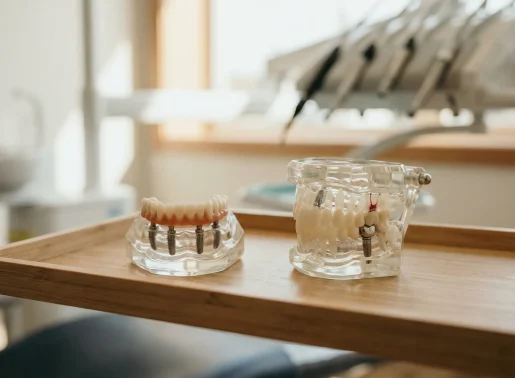
This procedure consists of a unified strategy to restore the aesthetic and functional harmony you have lost over time.
Beyond Individual Treatments
Full mouth rehabilitation (also called full mouth reconstruction or comprehensive restorative treatment) is a customized treatment plan that addresses multiple dental problems simultaneously, adopting a holistic view: we evaluate your teeth, gums, bone, bite, and jaw joints together, and then design a coordinated sequence of treatments that work toward a unified outcome. If your mouth were a house, individual treatments are like fixing a leaky faucet here and patching drywall there, whereas full mouth rehabilitation is a complete renovation addressing the foundation, the structure, and the finishes in a planned, logical sequence.
Who Needs Full Mouth Rehabilitation?
You may be a candidate for full mouth rehabilitation if you are experiencing several of these issues simultaneously:
• Structural problems:
Multiple missing teeth in different areas of the mouth
Failing crowns, bridges, or previous dental work
Teeth that are severely worn, broken, or decayed
Bite problems (teeth don’t come together properly)
TMJ pain or jaw dysfunction
• Periodontal (gum) problems:
Advanced gum disease affecting multiple teeth
Significant gum recession
Bone loss around teeth
• Aesthetic concerns combined with functional issues:
Teeth that are both unsightly and unhealthy
Previous cosmetic work that has failed
A smile you have been hiding for years
The Difference Between Rehabilitation and All-on-4
Patients sometimes confuse full mouth rehabilitation with All-on-4 full arch restoration, and they are related but fundamentally different approaches. All-on-4 is for patients whose teeth are failing so completely that the best solution is to remove all remaining teeth in an arch and replace them with a fixed prosthesis supported by four to six implants. It is a highly effective solution for the right candidate, and we perform many All-on-4 cases.
Full mouth rehabilitation is for patients who have multiple problems throughout their mouth but where strategic treatment can preserve some natural teeth while replacing others. It is a more customized, case-by-case approach where we might extract some teeth, crown others, place implants in specific locations, and address gum issues, all as part of a coordinated plan. During your comprehensive evaluation we will determine which approach (or combination of approaches) makes the most sense for your specific situation.
The Misch Advantage: All Specialists Under One Roof
When it comes to complex cases, we seek to integrate surgery and prosthetics in the same environment, transforming a fragmented process into a fluid and predictable experience.
Why Multi-Specialty Coordination Matters
Full mouth rehabilitation is complex by definition and requires expertise in multiple dental specialties: oral surgery for extractions and implants, periodontics for gum and bone health, and prosthodontics for crowns and restorations. Most practices can handle one or two of these well, but complex cases require referrals to outside specialists. Your general dentist refers you to an oral surgeon for extractions and implants, the surgeon refers you back for the crowns, and if you need gum work that is another referral. In this way, you end up moving between multiple offices, multiple schedules, and multiple philosophies of care, and if something doesn't go as planned everyone points at someone else.
Our Integrated Team
On our practice, you have access to all necessary specialists in one practice working together:
Oral Surgery & Periodontics: Dr. Craig Misch is dual board-certified in both oral surgery and periodontics (a rare combination that means one surgeon handles both your implant placement and any gum or bone procedures), and he literally wrote the textbook on bone grafting that other surgeons learn from.
Dr. Maggie Misch-Haring is a board-certified periodontist and implant surgeon, adding depth to our surgical capabilities and bringing expertise in minimally invasive techniques.
Prosthodontics: Dr. Katherine Misch and Dr. Harry Haring are board-certified prosthodontists (specialists in the crowns, bridges, and restorations that complete your smile), and Dr. Harry specializes specifically in full mouth rehabilitation and digital smile design.
One Plan, One Team, One Location
When you undergo full mouth rehabilitation at our practice your case is planned collaboratively, which means the surgeons and prosthodontists discuss your case together, agree on the sequence and approach, and coordinate your appointments so each phase sets up the next. This way, there are no communication gaps between offices because there are simply no multiple offices. This integrated approach produces better results, since when the person placing your implants and the person designing your final restorations are working from the same plan in the same facility, the results are more predictable. Adjustments can be made in real time, and if something unexpected arises during surgery the prosthodontist is down the hall, not across town.
The Full Mouth Rehabilitation Process
We transform complexity into a clear and manageable plan. We divide your journey into logical steps to ensure every step is predictable, safe, and surprise-free.
Phase 1: Comprehensive Evaluation
Everything begins with a thorough evaluation (which may take one to two hours) where we gather:
• Full-mouth digital X-rays and 3D CBCT imaging
• Photographs of your teeth, smile, and profile
• Impressions or digital scans for diagnostic models
• Detailed periodontal charting (gum health assessment)
• Bite analysis and TMJ evaluation
• Review of your medical history and any contributing factors We also spend time understanding what matters to you: what bothers you most? What are your aesthetic priorities? What is your timeline? After all, we understand that all of this affects your quality of life.
Phase 2: Treatment Planning Conference
Our specialists review your case together and develop a preliminary treatment plan, and then we present this plan to you in detail, explaining what we recommend, why, in what sequence, and what alternatives exist. You will see visual simulations of potential outcomes and receive a fee estimate covering all phases. In fact, we encourage patients to take the plan home, think about it, ask questions, and then make an informed decision.
Phase 3: Preparatory Procedures
Before major reconstruction can begin, we often need to establish a healthy foundation, which may include:
• Periodontal therapy: Treating active gum disease to stabilize your oral health
• Extractions: Removing teeth that cannot be saved
• Bone grafting: Building bone volume where implants will be placed
• Gum grafting: Addressing recession before final restorations This phase prepares the job site before construction begins, since we do not build on an unstable foundation.
Phase 4: Implant Placement
If your plan includes dental implants they are placed during this phase, either individually or as part of a full arch restoration depending on your plan. It is important to remember that we offer IV sedation for comfort during surgical procedures. After implant placement a healing period allows the implants to integrate with your bone, which typically takes three to six months. During this time you may wear temporary restorations so you are never without teeth.
Phase 5: Final Restoration
Once your foundation is solid (healthy gums, stable bone, integrated implants) the prosthodontist creates your final restorations, which may include:
• Porcelain crowns on natural teeth
• Implant-supported crowns
• Bridges to span gaps
• Veneers for aesthetic enhancement
Each restoration is custom-fabricated by top-tier dental laboratories, using materials selected for their durability, aesthetics, and your specific needs. The prosthodontist personally ensures that your bite is balanced, your aesthetics are natural, and that everything functions harmoniously together.
Phase 6: Refinement and Maintenance
After your restorations are placed, we schedule follow-up appointments to make any necessary adjustments, as small refinements to the bite are common and expected. Once everything is perfected, you transition to a maintenance schedule with our hygiene team to protect your investment for decades to come.
Treatment Timeline and What to Expect
Rebuilding a lasting smile requires respect for biological healing times, and for this reason, we do not rush steps, as long-term stability and excellence are our absolute priority.
How Long Does Full Mouth Rehabilitation Take?
Every case is different, but most comprehensive rehabilitation cases span six to eighteen months from initial evaluation to final restoration. The variables include:
• Extent of preparatory work needed: Significant bone grafting or periodontal treatment adds time.
• Number of implants and healing requirements: Implants need three to six months to integrate.
• Complexity of final restorations: More teeth being restored means more laboratory time.
Always thinking about optimizing the timeline, our treatment coordinators work to sequence your appointments efficiently, minimizing the total duration without ever rushing the biology. Implants cannot be loaded before they are ready, no matter how eager we all are to finish.
Will I Ever Be Without Teeth?
No. We plan provisional (temporary) restorations throughout your entire treatment so that you are never without functional and presentable teeth. These provisionals allow you to eat, speak, and smile normally while your definitive treatment progresses. In fact, in some cases, the provisionals also serve as a “test drive,” allowing you to experience how your new bite feels before we finalize everything.
Is Full Mouth Rehabilitation Painful?
We won’t pretend that comprehensive reconstruction is simple. There are surgical phases that involve recovery time, and you will have periods of adaptation as your bite changes. However, modern techniques and sedation options significantly minimize discomfort.
Most patients report to us that the process was much easier than they expected and that the improvement in quality of life made every appointment worthwhile.
Investment in Full Mouth Rehabilitation
At our practice, we discuss costs openly so you can plan your investment with total security:
Understanding the Cost
Full mouth rehabilitatio
from $30,000 to $80,000
Full mouth rehabilitation is a significant investment, typically ranging from $30,000 to $80,000 or more, depending on the complexity and extent of treatment required. Cases involving extensive bone grafting, multiple implants, and numerous restorations fall toward the higher end.
We provide detailed fee estimates after your comprehensive evaluation, broken down by phase so you understand exactly what each component costs, with no surprises, since the fee you are quoted is the fee you pay.
Comparing to Alternatives
It is worth considering what the alternatives cost, not just in dollars, but in time, frustration, and continuous dental crises:
Continuing to patch:
Every emergency visit, every failing crown, every extracted tooth adds up. Patients who have been "patching" problems for decades often have spent as much on reactive care as a comprehensive rehabilitation would have cost, without ever achieving a stable and comfortable result.
Lower-cost providers:
You can find practices offering cheaper implants and crowns, but complex cases require specialists working in coordination. A failed rehabilitation case that requires redo is much more expensive and traumatic than doing it right the first time.
Payment and Fee Structure
As a fee-for-service practice, we do not participate in insurance networks. However, patients with dental insurance can submit our documentation for out-of-network reimbursement. Payment is collected by phase, allowing you to spread the investment across the treatment timeline.
Why Patients Choose Misch for Complex Cases
Exceptional results require robust treatment offered by authorities who define the standards of the profession:
The Expertise of a Teaching Institution
Dr. Craig Misch not only handles complex cases but also teaches other surgeons how to handle them, as he is the author of textbooks used in dental schools and residency programs worldwide. When you are a full mouth rehabilitation patient at Misch, you are receiving care from someone who sets the standard for the profession.
Second Opinions Welcome
Many of our complex rehabilitation patients come to us after receiving treatment plans elsewhere that didn’t seem right. Perhaps the budget was shockingly high without adequate explanation, perhaps the proposed treatment seemed aggressive, or perhaps you simply want validation from a specialist before committing to a large job.
We welcome second opinion consultations. We will review what you have been told, conduct our own evaluation, and give you an honest assessment, even if that assessment is that your original treatment plan was sound.
Results That Last
Our philosophy is simple: do it right, do it once, and build something durable for the long term. We use premium materials, proven techniques, and meticulous attention to detail because our patients deserve work they won’t have to redo in ten years. Many of Dr. Craig Misch’s reconstructions from the 1990s are still serving patients beautifully today.
Full Mouth Rehabilitation FAQs
It is natural to have questions before a transformative treatment. With this in mind, we have gathered here direct answers to the most common questions:
How do I know if I need full mouth rehabilitation versus just fixing individual problems?
If you are treating more than four or five teeth, if your bite alignment is affected, or if you have structural issues (gum disease, bone loss) impacting multiple areas, a coordinated rehabilitation approach typically produces better results than fragmented treatment. Your comprehensive evaluation will clarify which approach makes sense.
Can you fix dental work that was done poorly elsewhere?
Yes. A significant portion of our complex cases involve redoing previous work that failed or was never quite right. It is often more challenging than starting from scratch, but our specialists have extensive experience correcting and rebuilding.
What if I only want to address part of my mouth right now?
We can phase treatment based on your priorities and budget. However, we will always give you the full picture so you understand how decisions in one area affect others. Sometimes the most cost-effective approach is comprehensive treatment; sometimes phasing makes sense, and we will help you weigh the options.
How long will my new restorations last?
With proper care and maintenance, quality restorations last fifteen to twenty-five years or more, and implants can last a lifetime. The key is ongoing hygiene and treating any issues promptly before they become major problems.
Do you offer sedation for the surgical phases?
Yes. We offer IV sedation for surgical procedures, administered by trained professionals who monitor you throughout. Many patients have little to no memory of their surgical appointments.
Schedule Your Comprehensive Evaluation
If your dental situation has reached the point where fragmented repairs no longer make sense, it is time for a different approach. A comprehensive evaluation gives you clarity: what is actually happening in your mouth, what your options are, and what it would take to truly resolve the problems you have been living with.
With no obligation whatsoever, you will leave with a clear understanding of your situation and a detailed plan, whether you choose to move forward with us or simply want the information to make an informed decision.
Or request an appointment online →
Office Location:
Misch Implant & Aesthetic Dentistry
120 South Tuttle Avenue
Sarasota, FL 34237
Serving patients from: Sarasota, Longboat Key, Lakewood Ranch, Siesta Key, Bradenton, Tampa, Fort Myers, and across Florida.